T
tonyV
Guest
O problema com estes "GTA" é que o andamento vai depender muito do peso do dono []
O peso do dono é igual num Cayman, num Alpine, num 4C ou em qualquer outro carro....

Acompanhe o vídeo abaixo para ver como instalar o nosso website como uma aplicação web no seu ecrã inicial.
Nota: Esta funcionalidade pode não estar disponível em alguns navegadores.
O problema com estes "GTA" é que o andamento vai depender muito do peso do dono [

O peso do dono é igual num Cayman, num Alpine, num 4C ou em qualquer outro carro....
Não estava a fazer comparações entre os do mesmo genero. Estava a gozar com a prioridade do fator peso/motores pequenos em que uma diferença de peso de 70 para 120 kls poder meter um rombozito no andamento do carro quando comparado com as avantesmas que andam a V8 ou V12 em que 50 kls de diferença não altera grande coisa.
Tb não estou a emitir uma opinião em contra ou a favor pq até aprecio mais o conceito do pequeno desportivo pluma, mas facto é que quando a prioridade é a escolha de materiais etc para aquilo andar bem com motores de 4 cil. o peso do condutor acaba por ter alguma importancia.
Ou seja estava a pensar/gozar em "voz alta" mas no fundo, até acho mais piada a estes que os muscles brutamontes .
 ]
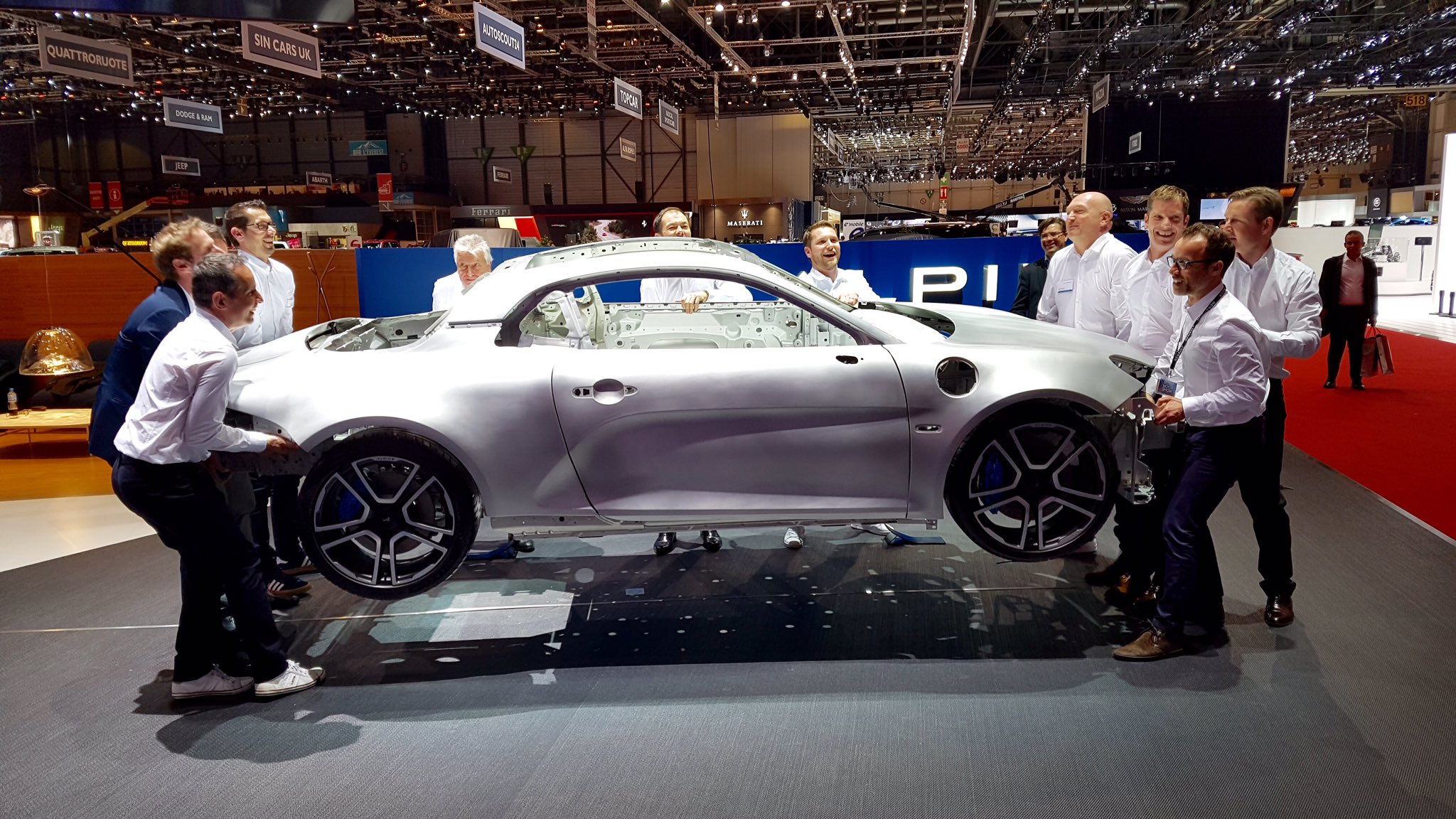
]David Twohig, chief engineer on the new Alpine A110, admits working on a new sports car with no lineage – a car that’s become his baby – is the motoring job from heaven.“I have to give you the stereotype answer: yes, this is the dream, for any engineer or anyone who likes cars”, he beams from the passenger seat of an A110 at the Geneva motor show. “This is a once in a lifetime job.”
I immediately ask him to dispel some myths. Are there sneaky bits of Clio RS lurking under the Alpine’s skin?
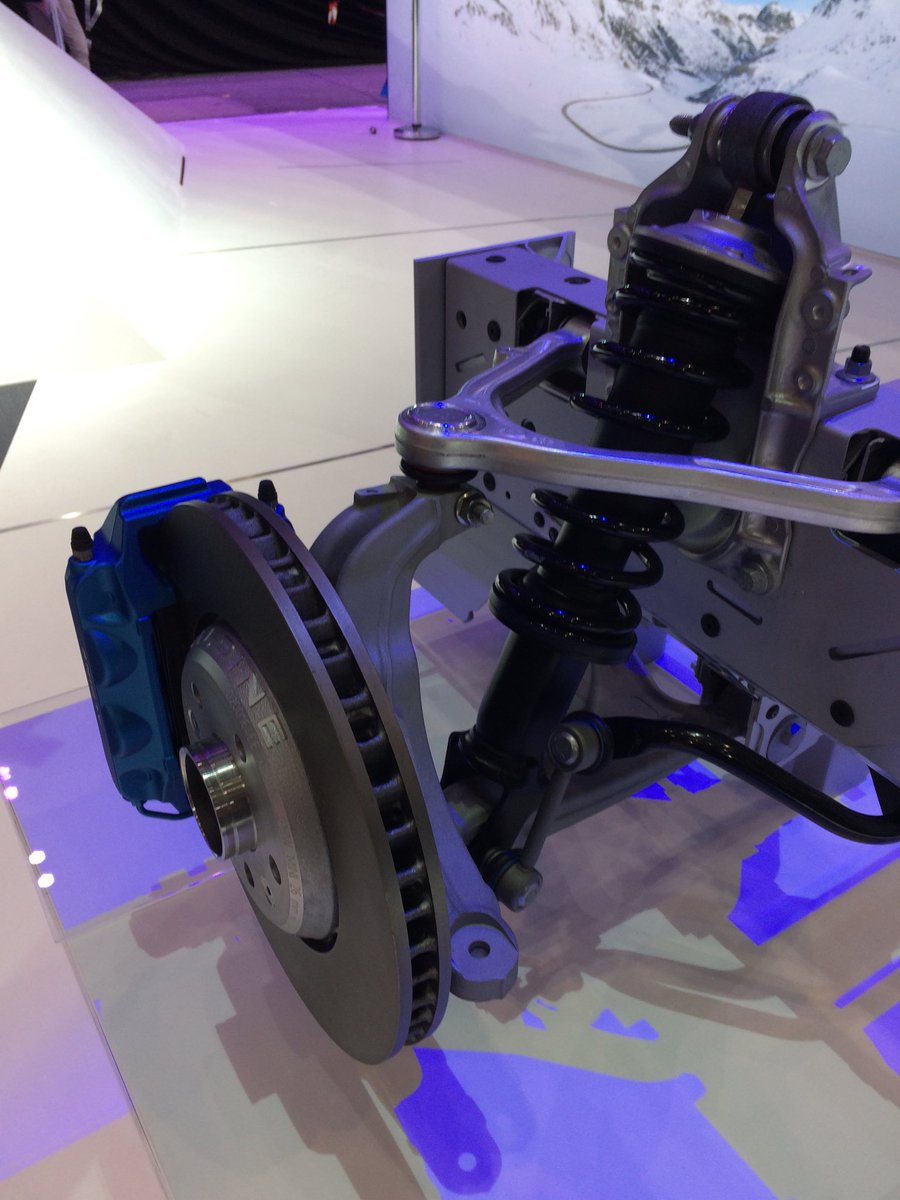
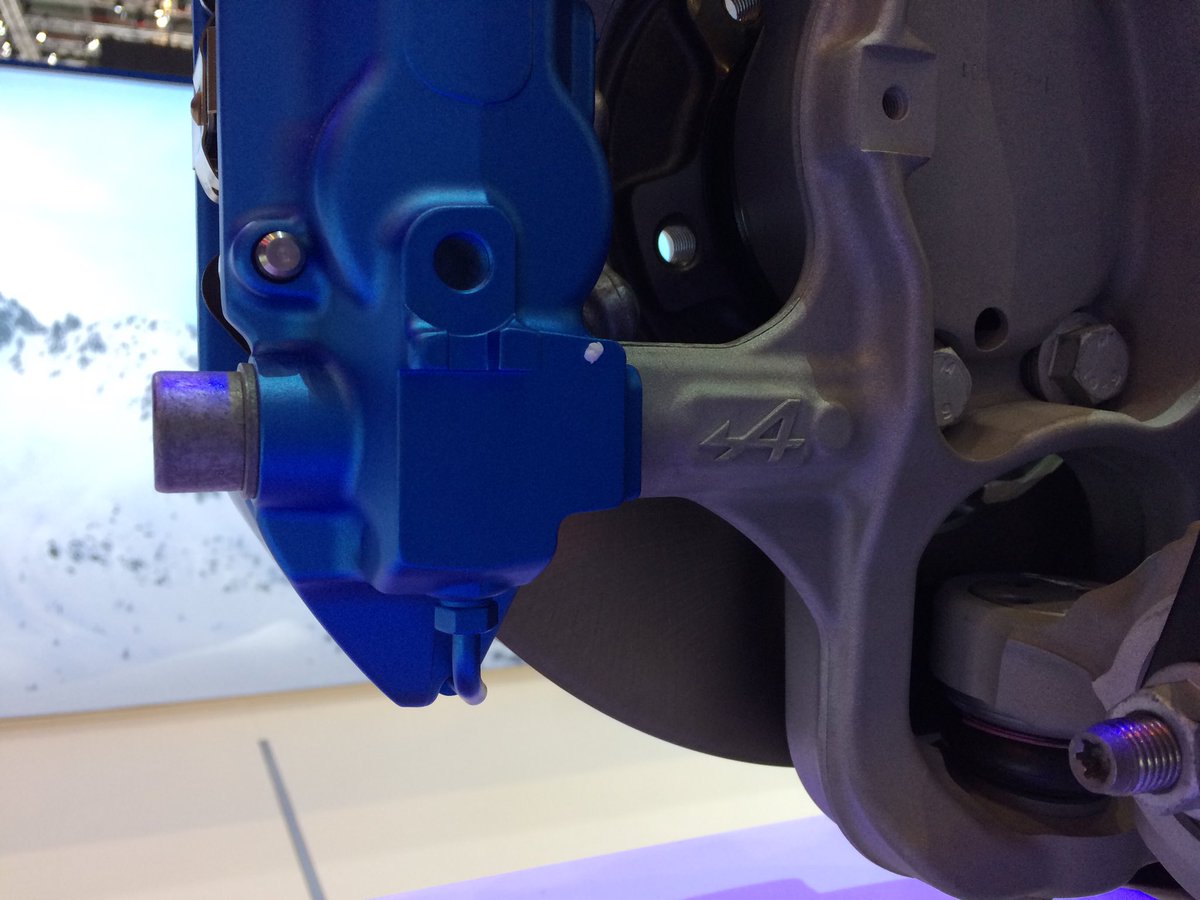
“No sir! We can dispel that. There has been lots of speculation and imagination, but almost nothing has been carried over from a Renault besides under-the-skin components like wiring. We have a bespoke extruded and bonded aluminium chassis. We have bespoke front and rear axles and suspension. The engine is all-new – not a re-bored Clio engine. It is a new aluminum block 1.8-litre engine with around 250bhp and 236lb ft. It does not exist in any other Renault-Nissan alliance vehicle. I’m not saying it will never exist in any other car…but its first application is in the Alpine.”
“The gearbox is a new Getrag seven-speeder, not the gearbox from the Clio RS, which has a six-speed dry clutch, but this is a seven-speed wet clutch.”
So far so good, but the Clio RS has been criticised for sounding dull and having slurred gearshifts – is that something the engineers have learned from for the Alpine?
Twohig is adamant the Alpine will feel exciting when you give it the beans. “One of the big advantage of a wet clutch is getting faster changes. In Track mode, we have swift speeds in Porsche and Ferrari territory. I’ll admit it’s a little bit brutal for the passenger – we’ll be getting some head-toss – but hey, it’s Track mode. So in shift speed, I think you’ll be happy.”
“For exhaust noise, we put a lot of work into this. It’s a four-cylinder engine – it’s not a V12. It has direct fuel injection, and it’s turbocharged. Modern engines like this just don’t make a beautiful sound like an old engine on Weber carburetors or whatever. So we’ve done thousands of hours of CFD modeling on the exhaust and added an active exhaust valve, so in Sport and Track mode the sound is active and I believe we have one of the best-sounding four-cylinders out there.”
From the drivers’ seat, I click the (Clio-sourced) metal gearshift paddles a few times. This is a retro car; maybe people would have liked a retro transmission. Was a manual gearbox ever considered?
“I would be lying if I said no”, answers David. “It was considered early on in the project but we shelved it pretty quickly because okay, there’s a hardcore client out there who will always want a manual gearbox even though I can prove the dual-clutch is more efficient. But the percentage of those people is very, very small, and the business case is overwhelmingly for DCT transmissions. We’re very happy with the result and we think 95 per cent of our customers will be too.”

Time to talk rivals. Is it fair to say Alpine is aiming for the open goal between the everyday, refined Porsche Cayman and the hardcore Lotus Elise (and downright wayward Alfa 4C)?
“You said it better than I could”, nods David. “I don’t want to name specific names, but there are great, radical track cars out there which are great fun for half an hour on a dry track, but after that you just want to get out. At the other end, there are great cars that we would categorise as a little bit GT, a bit too sensible. So we’re hoping to hit that sweet spot…”
The driving position in the Alpine’s cosy but not cramped two-seat cockpit has loads of reach adjustment on the suede-topped steering wheel and enough legroom for a 6’ 1” driver, but the supportive leather bucket feels a tad too high. “Don’t worry”, reassures the car’s enthusiastic father. “This seat is set in the highest position, but we have three height settings to bolt the seat into, that the dealer will set for each owner at the dealership. And having no seat height mechanism saves weight… Alpine’s boss Michael van der Sande is two metres in height and he fits fine.”
“We wanted this interior to be a nice place to be, and not just for half an hour. We’re very proud of the low, narrow sill. You can get out of this car wearing a skirt! It’s not a pain in the ass every day. Visibility is good because the pillars are really elegant and slim for a modern car. The materials are authentic – what you think is leather is real leather, what you think is aluminium is real aluminium, and the carbon trim is real carbon.”
Just how difficult has it been to design and package a sports car for a company that hasn’t built one for decades? “The biggest battle for the past five years has been weight management”, admits Twohig. “It’s so easy to say ‘let add 300 grammes here or there’, but then you get into a vicious spiral, where you need bigger brakes, stiffer springs, and then the car gets heavier and all of a sudden a 1.8-litre engine is not enough. This has been a massive challenge.” As is, the car weighs 1,080kg ready to go, and offers 231bhp/tonne.
Of course, Alpine could have gone for ultra-committed weight-saving and opted for an Alfa 4C-spec carbon tub, but didn’t. Why not? “Early on, it was on our blank sheet of paper, along with steel construction, or an aluminium-composite hybrid. Our solution, we think, is unbeatable for weight, stiffness, and build quality. If you use carbon, panel gaps are not so great, finish is not perfect, and you have to have [good fit and finish] in 2017. You can’t be building a car that’s a bit shoddy these days…”
A questão é que o factor peso, ao contrário da potência, tem um papel que vai muito além dos números (aceleração, recuperação, etc)[

O 718 S nao tem uma configuracao semelhante. Pesa mais, tem mais potência, etc, etc, etc, etc, terá comportamento distinto. Embora o peso seja um factor que tenha influência em performance, nao é o único fator para que o carro mais leve tenha melhor performance em curva/handling que o 718 S. Pode ser mais divertido de conduzir, pode ser mais facil brincar com ele por ser mais leve, mas nao necessariamente mais performante. Posso estar enganado, mas estou a assumir algo do género do 4C.Sim, sim....já deu para perceber que 20% de diferença de peso é imperceptível. Only in FAHO[]) que 250Kg de peso não se reflectem em carros com configuração semelhante??? Achas que o handling em curva, travagem, etc é igual ao litro com pesos tão distintos!? Força, o outro também andava a pregar que diferenças de 10% de peso para a mesma base e mesma configuração era pior no teste do alce....
E sim o peso é o factor número um de qualquer desportivo, seguido de potência. Isto falando de números brutos. Mas repito, só neste país/forúm é que não é assim[]:sh)

 ]
]
Entao e entre um 718 S e um 991.2 Turbo S?Claro ! e não só.
Muito mais giro fazer o cabo da Roca com um Cooper S que com um S4
O 718 S nao tem uma configuracao semelhante. Pesa mais, tem mais potência, comportamento, etc, etc, etc, etc, terá comportamento distinto. Embora o peso seja um factor que tenha influência em performance, nao é o único fator para que o carro mais leve tenha melhor performance em curva/handling que o 718 S. Pode ser mais divertido de conduzir, pode ser mais facil brincar com ele por ser mais leve, mas nao necessariamente mais performante. Posso estar enganado, mas estou a assumir algo do género do 4C.
Foi isto que quis dizer, nunca escrevi que 200kg era pouco. Tiraste bastantes conclusoes daquilo que eu disse, tens de ver se trocas a banheira que o peso deve andar a fazer te comichao...
]The biggest battle for the past five years has been weight management”, admits Twohig. “It’s so easy to say ‘let add 300 grammes here or there’, but then you get into a vicious spiral, where you need bigger brakes, stiffer springs, and then the car gets heavier and all of a sudden a 1.8-litre engine is not enough. This has been a massive challenge.”
Entao e entre um 718 S e um 991.2 Turbo S?
tonyV, acho que cada qual terá os seus motivos na compra, nao é golden rule...E portanto dos 3 pontos essenciais que se procura num desportivo, com menos peso já leva avanço em dois...é esse o argumentos de menos peso[