
Instale a aplicação
Como instalar a aplicação no iOS
Acompanhe o vídeo abaixo para ver como instalar o nosso website como uma aplicação web no seu ecrã inicial.
Nota: Esta funcionalidade pode não estar disponível em alguns navegadores.
Está a usar um navegador desatualizado. Pode não apresentar este ou outros sites corretamente.
Deve atualizar ou utilizar um browser alternativo.
Deve atualizar ou utilizar um browser alternativo.
F1 - 2018
- Iniciador de tópicos Omega
- Data de início


SilverArrow
Moderador
Aquele boost extra que eles conseguiram do motor, está a fritar os pneus [][
Mesmo assim ao contrário do que se esperava o Mercedes era mais rápido em recta.
nebuchadnezzar
Banido
Vamos ver a coisa de outra forma.Mesmo assim ao contrário do que se esperava o Mercedes era mais rápido em recta.
A Ferrari tem neste momento uma ligeira vantagem na unidade motriz. Ora se andarem com mais asa, mesmo em Monza, conseguem ter praticamente o mesmo rendimento mecânico, acelerações, velocidades médias e perderem ligeiramente em ponta. Por outro lado ganham em curva e tração. Por outro lado ainda, perdem no desgaste dos pneus. Traseiros principalmente, pois à saída das curvas, saem com mais peso, mais downforce.
Isto no fundo explica tudo, mas pode estar tudo errado!

nokia71
New member
Eu acho que houve dois grandes culpados no resultado da Ferrari. O primeiro culpado doi a equipa. Mandou parar demasiado cedo o kimi, e as voltas que poderia ter parado mais tarde, vieram a fazer falta no final. Provavelmente aguentava na boa mais umas 5 voltas.
O outro grande culpado foi o vettel. Muito mais que ficar em primeiro ou segundo, é necessário saber estar na luta. O segredo para ganhar o campeonato, é andar o mais próximo da frente possível. Tentou defender o 2º lugar e acabou por ficar bem mais longe, quando poderia ter uma corrida inteira para lutar por um bom lugar ou pela vitória. O mesmo aplica-se ao Ham. Desta vez as coisas até correram bem, mas poderia ter danificado o carro e ficado fora da corrida.
As corridas de F1 atualmente, pouco ou nada se decidem no arranque(principalmente para os primeiros). Entrar em lutas arriscadas logo na primeira volta é pouco inteligente para quem luta por um campeonato.
O outro grande culpado foi o vettel. Muito mais que ficar em primeiro ou segundo, é necessário saber estar na luta. O segredo para ganhar o campeonato, é andar o mais próximo da frente possível. Tentou defender o 2º lugar e acabou por ficar bem mais longe, quando poderia ter uma corrida inteira para lutar por um bom lugar ou pela vitória. O mesmo aplica-se ao Ham. Desta vez as coisas até correram bem, mas poderia ter danificado o carro e ficado fora da corrida.
As corridas de F1 atualmente, pouco ou nada se decidem no arranque(principalmente para os primeiros). Entrar em lutas arriscadas logo na primeira volta é pouco inteligente para quem luta por um campeonato.

JRodrigues
Well-known member
Mesmo assim ao contrário do que se esperava o Mercedes era mais rápido em recta.
Porque a Mercedes ainda tem vantagem na potência máxima. A Ferrari conseguiu um pouco mais de potência/binário em rotações mais baixas, o que ajuda na saída das curvas. E a Mercedes parecia ter mais asa atrás:
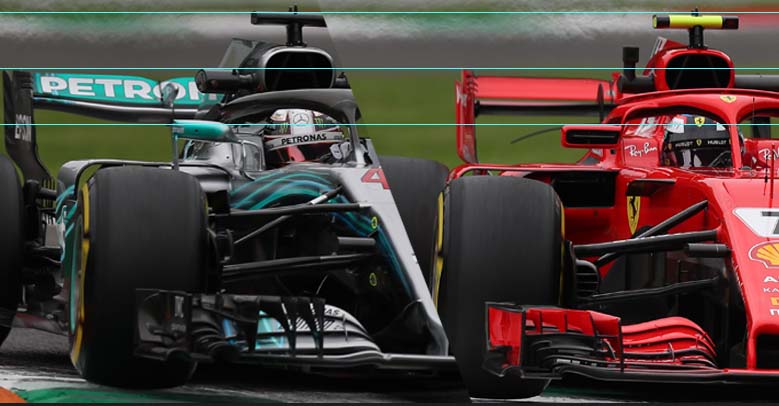
Imagem

Ratcher
Well-known member
Porque a Mercedes ainda tem vantagem na potência máxima. A Ferrari conseguiu um pouco mais de potência/binário em rotações mais baixas, o que ajuda na saída das curvas. E a Mercedes parecia ter mais asa atrás:
Onde arranjo o gráfico de potência e binário de cada uma das equipas?
JRodrigues
Well-known member
Onde arranjo o gráfico de potência e binário de cada uma das equipas?
Mandas mail para gráfico@potênciasdaf1.com

cloverleaf
Well-known member
Mandas mail para gráfico@potênciasdaf1.com
Essa é a versão portuguesa, a original é f12018enginepower@fia.com - Actualizado ao minuto!
[
][ ]
]
Zanetti
New member
Essa é a versão portuguesa, a original é f12018enginepower@fia-daimler.com - Actualizado ao minuto!
[
fixed!
cloverleaf
Well-known member
Estará relacionado com os correctores ou a maneira como atacam os correctores (de maneira mais agressiva)?
Em Monza foi evidente que o Kimi atacava os correctores de um modo pouco conveniente para os pneus, principalmente a segunda chicane, o pneu traseiro esquerdo ficava ali a ser espremido entre o fim do corrector e a gravilha.
Também concordo, nomeadamente na tal chicane onde a gravilha estava a vir para a strada!
Quanto ao comentário que foi feito sobre as opções da Ferrari para o Kimi em Monza, seria muito difícil optar por pedir ao Kimi para acabar atrás do Seb para este ganhar 3 pontos. Percebo que ficaria a 27 pontos da liderança, mas eu, na pele do Arrivabene, não sei se teria coragem para o fazer...
Ratcher
Well-known member
fixed!
Obrigado, agora sim consigo finalmente mandar postas sobre quem tem mais potência e em que regimes.

nebuchadnezzar
Banido
Sim, porque para veres quem tem mais asa, basta uma foto e ligas o olhómetro!Obrigado, agora sim consigo finalmente mandar postas sobre quem tem mais potência e em que regimes.

JRodrigues
Well-known member
Pirelli believe that the blistering that ended Kimi Raikkonen's hopes of winning Formula 1 Italian Grand Prix was triggered by a perfect storm of circumstances.
F1 teams entered Sunday's race at Monza on the backfoot in terms of set-up requirements, after the weekend's first practice session was affected by bad weather then a Marcus Ericsson crash resulted in a lengthy red flag in FP2.
The 10-lap long runs teams were able to complete proved to be not enough to fully understand how the tyres would behave over a full race distance.
Pirelli's motorsport racing manager Mario Isola said: "Friday was a very strange day with FP1 that was wet, so teams had to concentrate all their work on the car in FP2.
"And then there was Ericsson's crash, so FP2 was one hour in which they had to set up the car, test two compounds for the delta lap time and try to do a long run with a heavy car on a full tank.
"The long run was 10 laps, so then you try to extrapolate what happens, but it is not something that is linear."
Although the lack of running earlier in the weekend was the same for all teams, Raikkonen was especially hurt in the race because of the unique circumstances he faced.

After his pitstop, he had had to push harder and longer than he would have liked on fresh soft tyres to ensure Lewis Hamilton could not overcut him.
The combination of that, plus being trapped behind Valtteri Bottas, which meant his car was losing downforce and sliding more, ultimately triggered the blistering problems that proved so costly.
"The soft compound is more prone to blisters because of the low wear," added Isola.
"Low wear means a lot of heat generation inside the compound and therefore blisters.
"If you follow another car you lose some downforce, and you slide a bit more. So compared to the supersoft, which is generating more grip and sliding less, this is all creating blisters.
"Then it is clear that if you push from lap one when the tyre is new, you have more rubber and you exacerbate the effect."
link
A explicação vinda de quem tem que a dar.
Ratcher
Well-known member
A explicação vinda de quem tem que a dar.
Thanks

Diamondplus
Well-known member
Ainda nem começaram a trabalhar juntos...
Marko: "Si trabajar con Honda no funciona, Red Bull dejará la F1"
https://soymotor.com/noticias/marko-si-trabajar-con-honda-no-funciona-red-bull-dejara-la-f1-953866
Marko: "Si trabajar con Honda no funciona, Red Bull dejará la F1"
https://soymotor.com/noticias/marko-si-trabajar-con-honda-no-funciona-red-bull-dejara-la-f1-953866
Diamondplus
Well-known member
Agora lembrei-me, esquecemos do erro do Vettel na Alemanha... (já são tantos este ano)!
Diamondplus
Well-known member
A "criança mimada": https://twitter.com/F1/status/1036900972289609728
A explicação vinda de quem tem que a dar.
Seria uma boa explicação para um fabricante que tivesse começado na competição à 2 anos.
Não para um fabricante que já competiu em todas as competições que usam pneus e em especial na F1 há mais de 50 anos. Há uma coisa que se chama base de dados. Esse nabo está a dizer que eles não têm isso é ?
Ou então andam a comprar a borracha aos russos e dá no que dá....[
]