What is it?
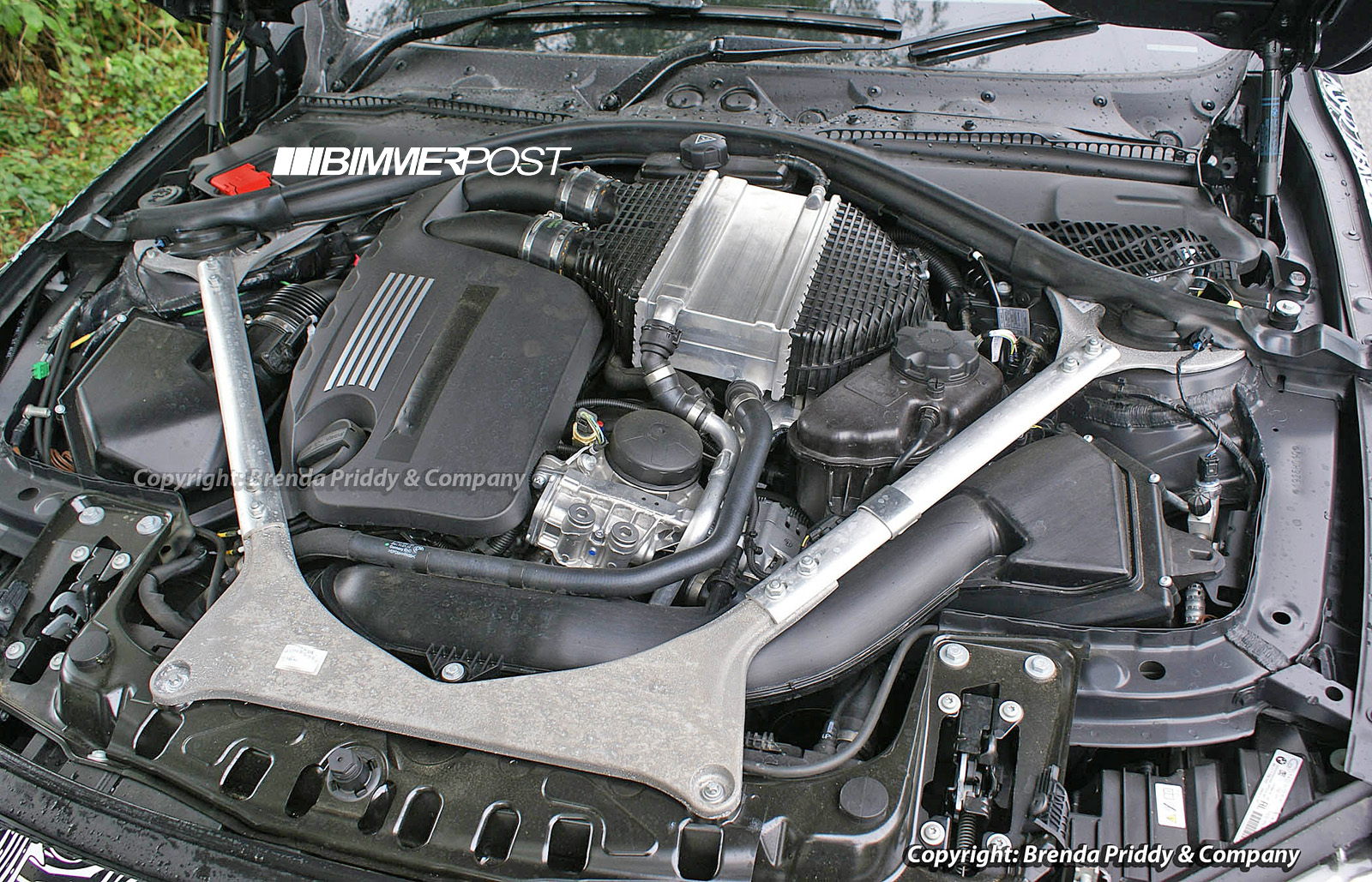
This prototype 1-series is fitted with BMW’s eagerly anticipated new three-cylinder petrol engine.
Strangely, given how eager they were to reveal other aspects of their newest and perhaps most radical production car engine to date, BMW’s engineers weren't too forthcoming about the power and torque figures of the new turbocharged three-cylinder petrol unit when they allowed us a brief test of this 1-series prototype.
Official figures will come later. For now we can report the particular version of the new engine we tried develops in the region of 178bhp and 199lb ft – impressive enough figures given its relatively small 1.5-litre capacity. But as other BMW data reveals, it is clearly not the highest state of tune it will be offered in.
It will play a major role in the second phase of its EfficientDynamics program which sets out to provide a 25 per cent reduction in fleet consumption by 2020. BMW says the alloy block engine is up to 10 per cent more economical than its existing 1.6-litre four-cylinder engine, which was developed in partnership with Peugeot.
Still, the story here extends more than the output and fuel saving properties of BMW’s new entry-level engine. Engine boss, Fritz Steinpanzer, told Autocar, the compact three-cylinder is the starting point for a while new range of engines, including replacements for today’s four- and six-cylinder units, that will head into various BMW models within the next year or so. All share common architecture that will enable them to be produced alongside one another on the same production lines for improved efficiency and cost saving.
More significantly is the fact that two of the new engines - the three-cylinder tested here and its yet to be revealed four-cylinder sibling - have been engineered to be mounted both transversely and longitudinally, paving the way for BMW’s first ever front-wheel drive car, as previewed by the Concept Active Tourer. Purists will scream. They often do. But BMW insists the only way they can successfully compete against the premium brand competition, namely Audi and Mercedes-Benz, in the volume segments is though a fundamental change to its existing engineer philosophy. Until now, it has held steadfastly to longitudinally mounted engines and a combination of both rear- and four-wheel drive.
BMW isn’t the first car maker to turn to three cylinder engines, of course. Daihatsu has a long history of such units in this country. Ford has also recently made big waves with its latest EcoBoost engine. But while not the first, the German car maker is treading new ground by proposing to introduce them to the executive car ranks as part of its EfficientDyanmics program – and not just in petrol guise but in diesel form, too.
What is it like?
Our first experience of the new BMW engine comes by way of a brief drive of a 1-series prototype fitted with the new petrol engine. Although conceived primarily for transverse mounting and front-wheel drive applications, including that of the new-generation Mini, the development unit we’ve been invited to test is mounted longitudinally and channels its drive to the rear wheels.
As with BMW’s new four and six-cylinder engines, the new three-cylinder receives an individual cylinder capacity of 500cm3. According to Steinpanzer, it is the optimum size regarding frictional, vibrational thermal properties. Other key features include a single air-to-air turbocharger, BMW’s patented Valvetronic system which provides continuously variable adjustment of both the inlet and exhaust valves, and the latest in high pressure direct injection technology.
The compact three-cylinder starts, like all BMW engines these days, with a push of dashboard mounted button, idling with a distant and rather unique timbre. This prototype is equipped with an eight speed automatic gearbox, modified with remapped electronics to take full advantage of the new engine’s unique properties. It’s a combination BMW says provides the best compromise between performance and economy.
From the first probing nudge of the throttle it’s clear the new unit is already at a fairly advanced state of development. It hauls the 1-series off the line with deceptive vigor and a degree of smoothness in low to middling revs I’ve yet to experience from a three-cylinder powerplant, Ford’s excellent 1.0-litre unit included. The inclusion of a counter rotating balancing shaft has successfully dampened the characteristic vibration, endowing the new BMW engine with remarkable refinement by existing three-cylinder standards.
It is the responsiveness of the new unit, though, that really stands out, giving it the sort of sporting attributes that have become part and parceled of just about all BMW engines down through the years. We are yet to discover exactly how much boost pressure it runs, but there is little hint of lag, just a lovely linear flow of power.
It sounds great, too, different to BMW’s existing four- and six-cylinder in a lot of ways. There is less of the characteristic turbine whine and more of a mechanical growl from up front, and the exhaust note is deeper with a character not unlike that of Subaru’s horizontally opposed four-cylinder once the revs begin to rise. And rise they do. As Steinpanzer explains: "One of the key development goals was to ensure the B38 could be carry its revs like traditional four- and six-cylinder BMW engines. We didn’t want to give up that unique selling point." The delivery is sophisticated, with strong urge from around 1500rpm well past the 5000rpm mark. Keep it spinning - and with such a fascinating exhaust note there is great incentive to do just that - and it will pull to 6500rpm before the onset of the electric rev limiter.
With some 44bhp and 37lb ft more than the turbocharged 1.6-litre four-cylinder used by the 116i, I’d suggest the prototype it would record a 0-62mph time of less than 8.0sec. On light throttle loads and typical motorway speeds, the trip computer also suggested something in the region of 56mpg, although as BMW was quick to point out this should only be taken as a very rough guide. It is, after all, just a prototype.
Should I buy one?
Our original two laps of BMW’s test facility on the outskirts of Munich ultimately turned into six with photography tasks thrown in. It wasn’t enough. BMW’s new three cylinder engine is nothing but intriguing.
Despite the limited mileage, we are already sold on its strong torque qualities, overall responsiveness, inherent smoothness throughout its complete rev range and alluring acoustic qualities. Just how all this will be carried over to the production version remains to be seen. And then there is the big question of how it will evolve in front-wheel drive guise.
For the moment, though, we can confidently say the future for BMW’s entry level models and its reputation for sportiness looks good.
BMW 1-Series prototype
Price n/a
Top speed 137mph (est)
0-62mph 8.0sec (est)
Economy 56mpg (est)
Weight 1260kg (est)
Engine 3-cyls, 1500cc, turbocharged petrol
Power 178bhp (est)
Torque 199lb ft (est)
Gearbox eight-speed automatic
in:
First drive review: BMW 1-series three-cylinder prototype Review | Autocar


 ]
]

 ]
] ]
]
]


