
Pneucareca
Well-known member
Sim é interessante, mas o carro está há 4 anos no mercado e TSIs nem vê-los...
O e-Up! custa um porradão de dinheiro!
Julguei que estavas a falar do TSI do facelift.
Em geral os elétricos.

Acompanhe o vídeo abaixo para ver como instalar o nosso website como uma aplicação web no seu ecrã inicial.
Nota: Esta funcionalidade pode não estar disponível em alguns navegadores.
Sim é interessante, mas o carro está há 4 anos no mercado e TSIs nem vê-los...
O e-Up! custa um porradão de dinheiro!
 ] O meu Uno de 45cv era lento, mas o Lupo tirava-me do sério. A dúvida se haveria ou não motor por baixo do capot era constante.[
 ]]
]]
Tinha ideia que o 1.0 do Up! ainda seria derivado de algum motor mais antigo como esse cómico 1.0 de 50cv mas não, o motor do UP! é completamente novo, pensado especificamente para ele de moto a caber na frente minúscula que o carro possui. [Tive várias vezes oportunidade de conduzir um Lupo 1.4 Tdi e também um 1.0. Apesar da vitamina extra do 1.4 Tdi, nunca fui fã desse motor. Conduzi vários carros com ele, e no geral, é um motor desagradável de usar, como o são praticamente todos os pequenos diesel. No entanto considero-o uma ferramenta eficaz em providenciar performances com consumos comedidos.
O Lupo 1.0, sim, era desesperante. 50cv... Oh pá![
Quanto ao 1.0 do Up, não o posso considerar arcaico. Experimentei a versão de 75cv num CrossUp.
É um motor interessante de usar. Linear, resposta pronta, e em altas revela até bastante vivacidade. Até seria o ponto forte do carro, não fosse a caixa de relações algo longas estrangulá-lo. Os consumos saem beneficiados, mas a meu ver, mata o que é na essência um excelente motor.
Este TSi promete agitar as coisas.
Promete consumos baixos, e como tem sido apanágio quando colocado em outros modelos onde está instalado, promete uma experiência refinada, que os pequenos diesel não conseguem replicar.
E o melhor, corta 3 segundos o tempo dos 0-100 relativamente ao de 75cv, o que o coloca num patamar de performance aceitável.[
Não deverá diferir muito do Twinair da Fiat nesse aspecto.
Deverá ser o motor mais adequado ao citadino.
]] montado num mais refinado A4 mas continuo a apreciar bastante o manquinho. Já me questionei se alguém andou a brincar com a electrónica daquele charuto. 
What is it?
When you scan the spec and see the VW Up GTi is powered by a 1.0-litre, three-cylinder engine producing a meagre - by the standards of this illustrious performance brand today - 114bhp, you might come over a bit cynical. You might, for instance, wonder if this baby GTi, set to launch early in 2018 and driven here in prototype form, is a cynical marketing exercise to add a bit of vim to the Up range.
Read more about the confirmed Up GTi here
But, even before you get behind the wheel or chat to the wide-eyed engineers working on the project, VW has a pretty convincing counter-argument through a comparison with the Mk1 VW Golf GTi. Demonstrating once again how safety requirements have grown modern cars, for starters, the Up GTi is not far removed from the Golf - 3600mm of length plays 3705mm, 1627mm width 1610mm, a 2415mm wheelbase 2400mm, 1020kg to 880kg.
And if that latter figure makes you twitch, consider that the Up’s 114bhp tops the 109bhp made by the 1.6-litre engine of the 1976 original. Sure, the safety kit and technology packs add a significant amount of extra heft, but the power-to-weight ratio is not far removed at all. Nobody is revealing torque figures just yet, but this manual Up GTi will do 0-62mph in 8.8sec, compared to the Golf’s 9.2sec. If it’s offered with DSG, the Up GTi’s will come down further, too.
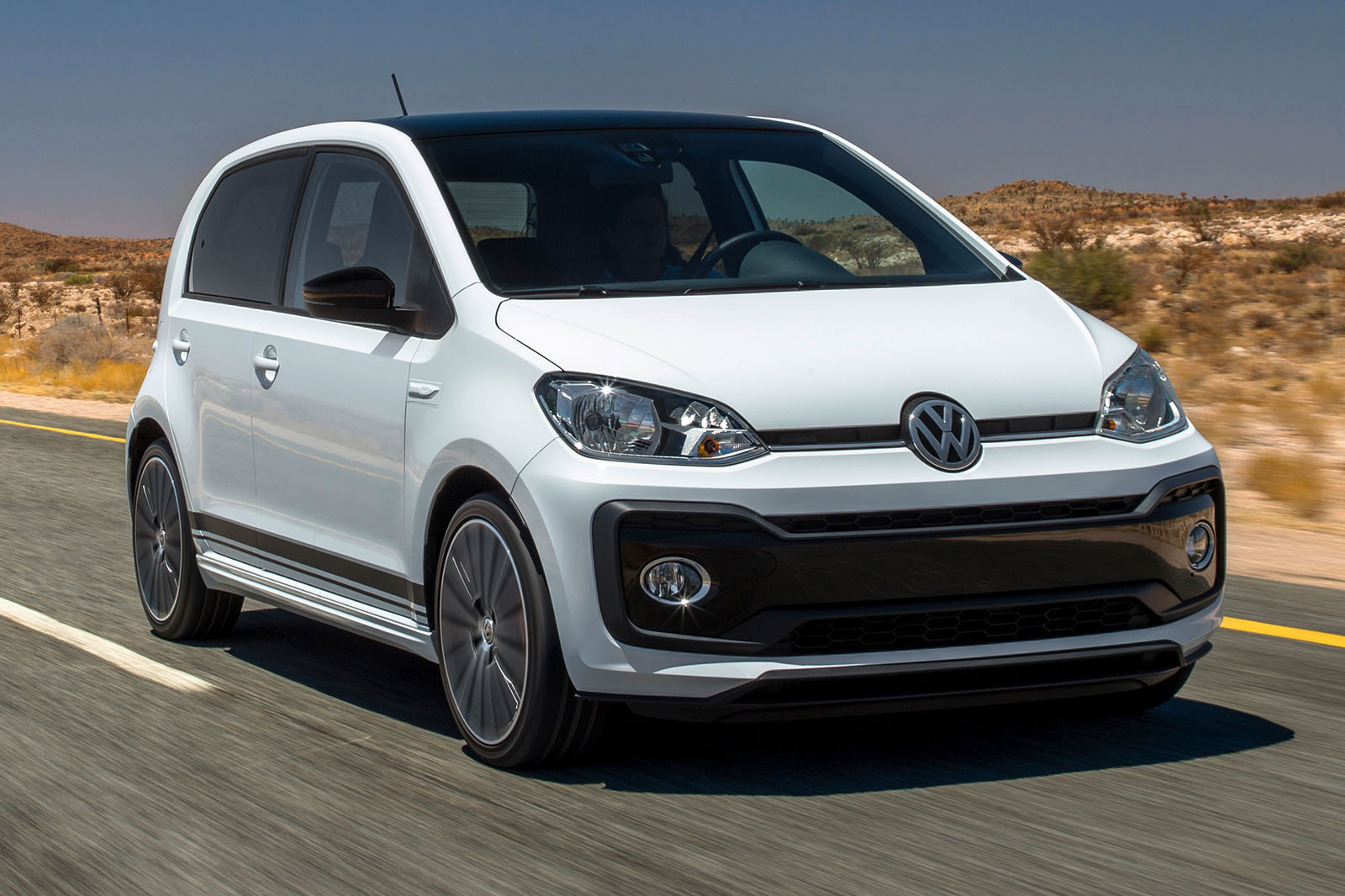
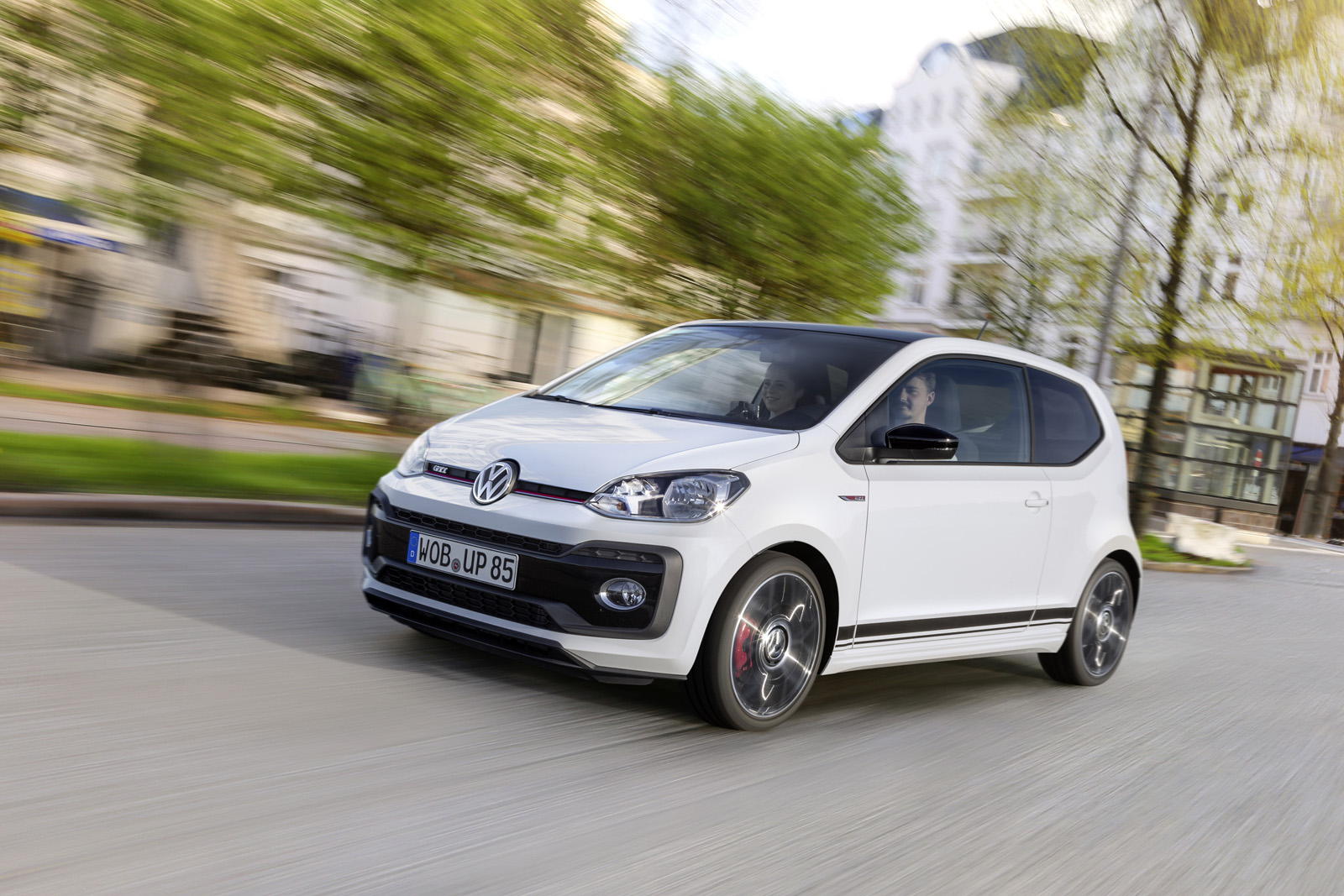
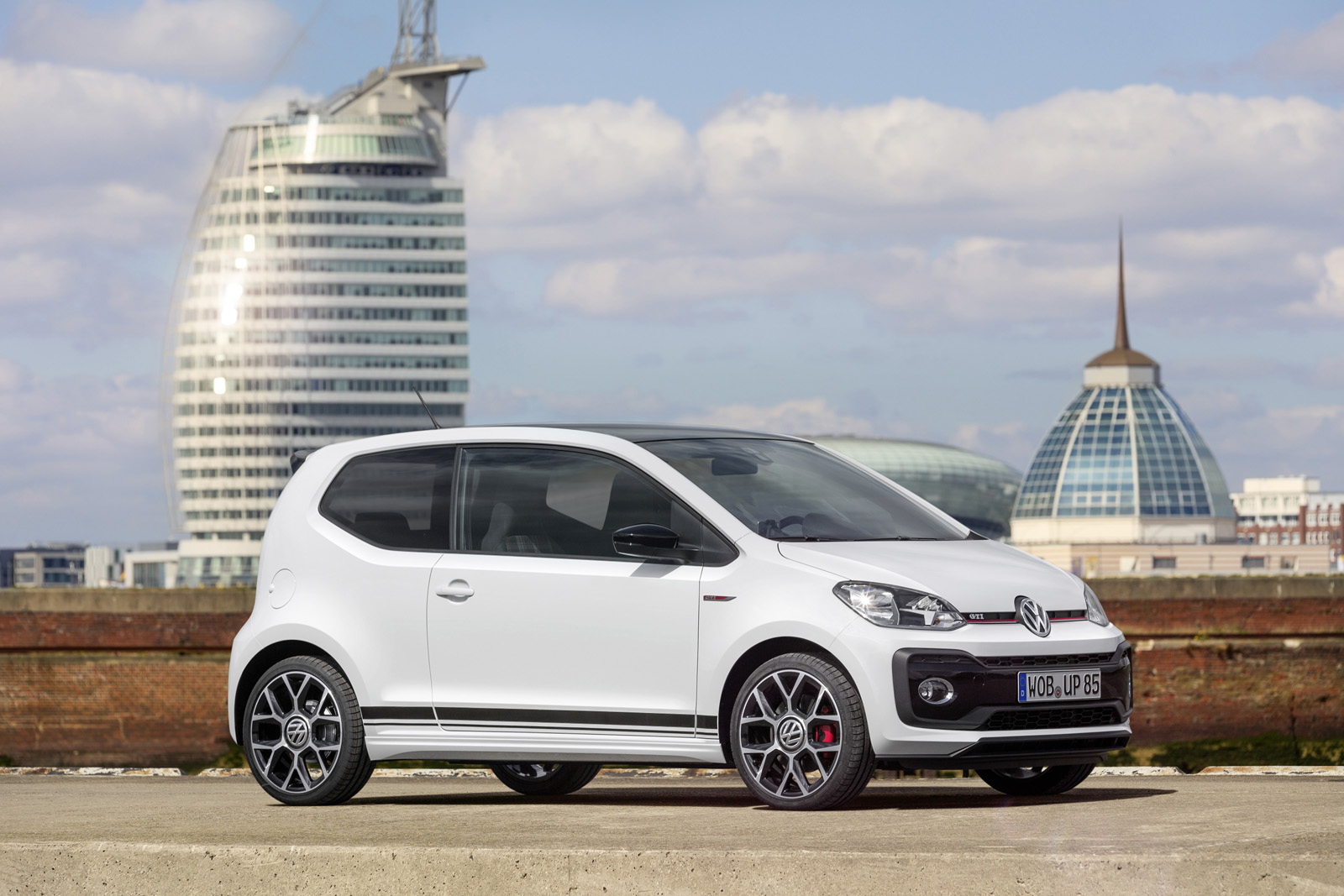
Even on this prototype - still more than a year from launch - all the GTi hallmarks are present and correct. There’s a stripe down the bottom edge, tartan seats, red stitching on the steering wheel and a fancy red and black finish on the Up’s moulded dashboard, plus a six-speed gearbox with reverse up and off to the left and a chunky steering wheel to grip; entry-level GTi or not, there’s no corners cut.
Technically, the engine is quite a remarkable feat, running 1.5-bar or turbo pressure (the same as a 911 Turbo, no less) and at a 10.5: 1 compression ratio. Coupled with a water-cooled intercooler, the output from the three-cylinder 1.0-litre unit is pretty impressive and, while engineers reckon they could have pushed closer to 125bhp, this they reckon gives the best trade between power, torque and response.
What's it like?

The Up GTi's peppy engine pulls remarkably well and has a linear power band. The only interruption is an overly-long second gear ratio, which pauses progress in the name of fuel economy gains, reason enough to pause to curse some aspects of the modern world. Work it hard and you are amply rewarded, aided by the slick manual gearbox shift and precise control weights of the pedals. It’s surprisingly refined too - almost disappointingly so, in fact, given its lineage.
Mechanically, the Up GTi is much changed from standard, not least in its use of some Polo-derived (but heavily modified) parts such as the steering rack and ventilated brakes. The car sits 15mm lower than standard and has a heavily reworked suspension set-up on its MacPherson strut front and torsion beam rear, including stiffened top mounts, new-shape lower suspension arms and dampers tuned to control bounce at lower compression speeds.
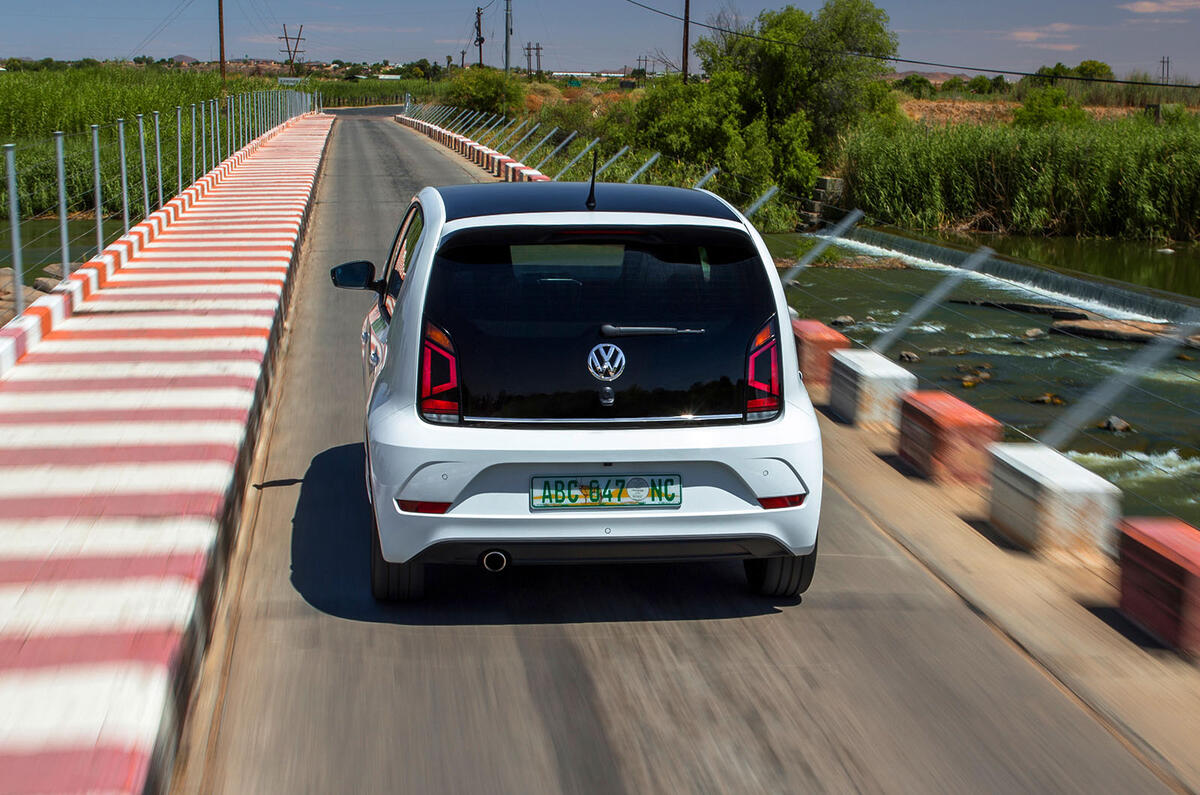
Just how effective all this is was hard to judge on the largely straight roads of South Africa, where VW conducts hot weather and durability testing, but what opportunities there were suggested the car is set up with decent weight through the wheel and a balance that leans towards neutral before dipping into the safety first of understeer. Engineers suggest you can make it oversteer if you really try - but, again, the modern age demands they err towards a responsible set-up. Ride comfort was impressive, soaking up low-frequency ripples and damping down bigger bumps despite its sporty leanings.
Should I buy one?
From this prototype drive, what we can conclude is that the Up GTi is a car that has abundant promise even so far from making production. It won’t make your eyes water, but it is engaging and eager to please - even in top gear, the engine keeps pulling towards its 119mph v-max. Some will struggle to reconcile the idea of a three-cylinder GTi, but it’s worth noting that VW is believed to ahead of the curve here, as even the likes of Ford consider similar units for ST models; the times, they are a’ changing.
Of course, with time, so expectations have moved on too, and for all the comparison with the original Golf GTi it would be misleading to think that the Up GTi is going to evoke memories of yesteryear and have a generation of retirees rushing to dealerships to relive their youth. It’s a different car for a different era.
Instead, what VW is hoping to create is a car that will draw in a new generation of GTi lovers - albeit potentially financially aided by misty-eyed parents. Much will depend on pricing and running costs - especially insurance - but rumours already suggest an asking price of around £15,000. That’s a lot for such a small car, but on this evidence it may well be worth it.
2018 VW Up GTi
Location South Africa; On sale Early 2018; Price £15,000 (est); Engine 3cyls, 999cc, turbocharged, petrol; Power 114bhp at tbc; Torque tbc; Gearbox 6-spd manual; Kerb weight1020kg; 0-62mph 8.8sec; Top speed 119mph; Economy tbc; CO2 rating/BIK tax band tbc RivalsRenault Twingo GT, Abarth 595
TSI com 90cv. hum...
Já deve espevitar a criatura, [
mais ainda estou à espera do GT, que, supostamente deveria ter uns 110
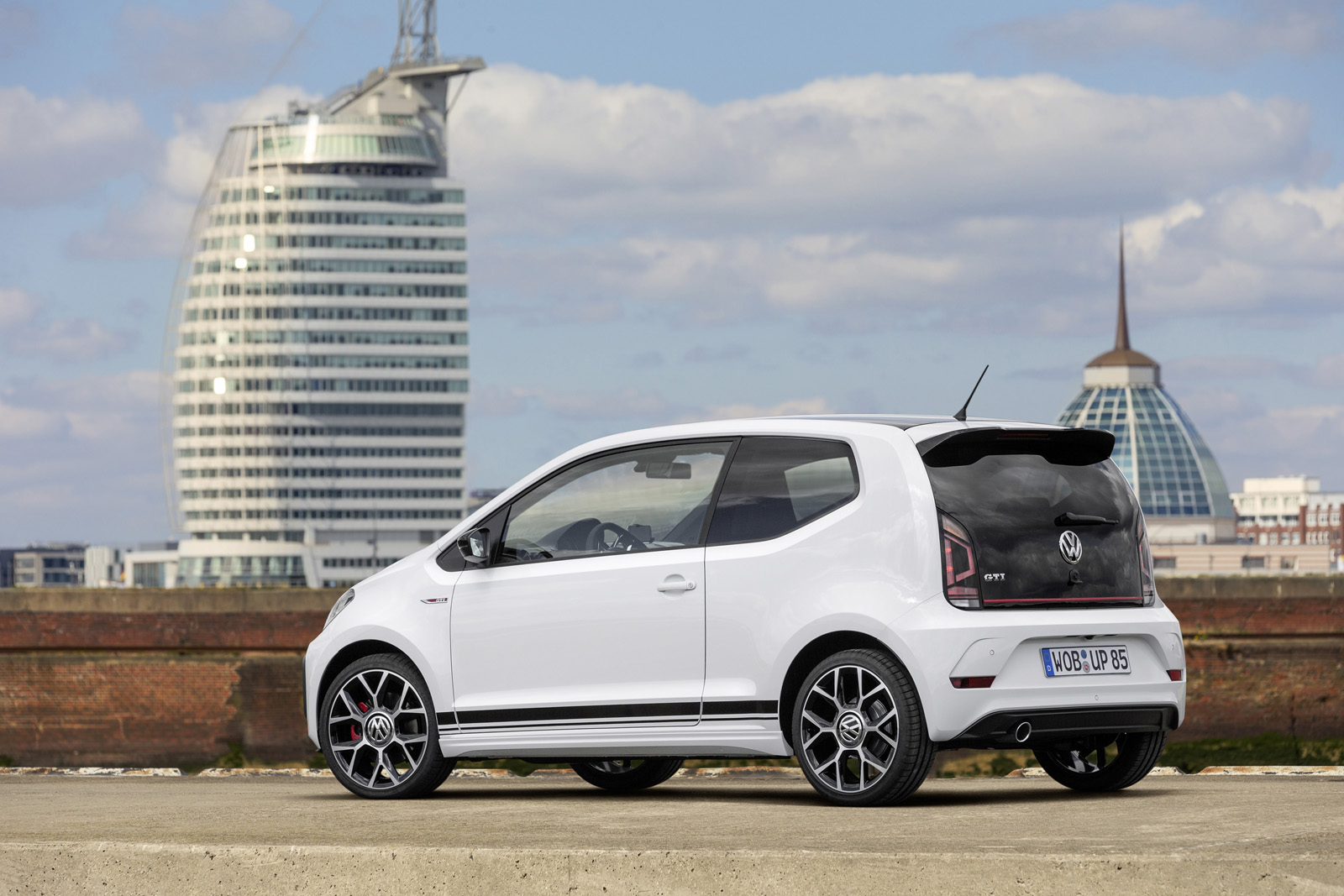
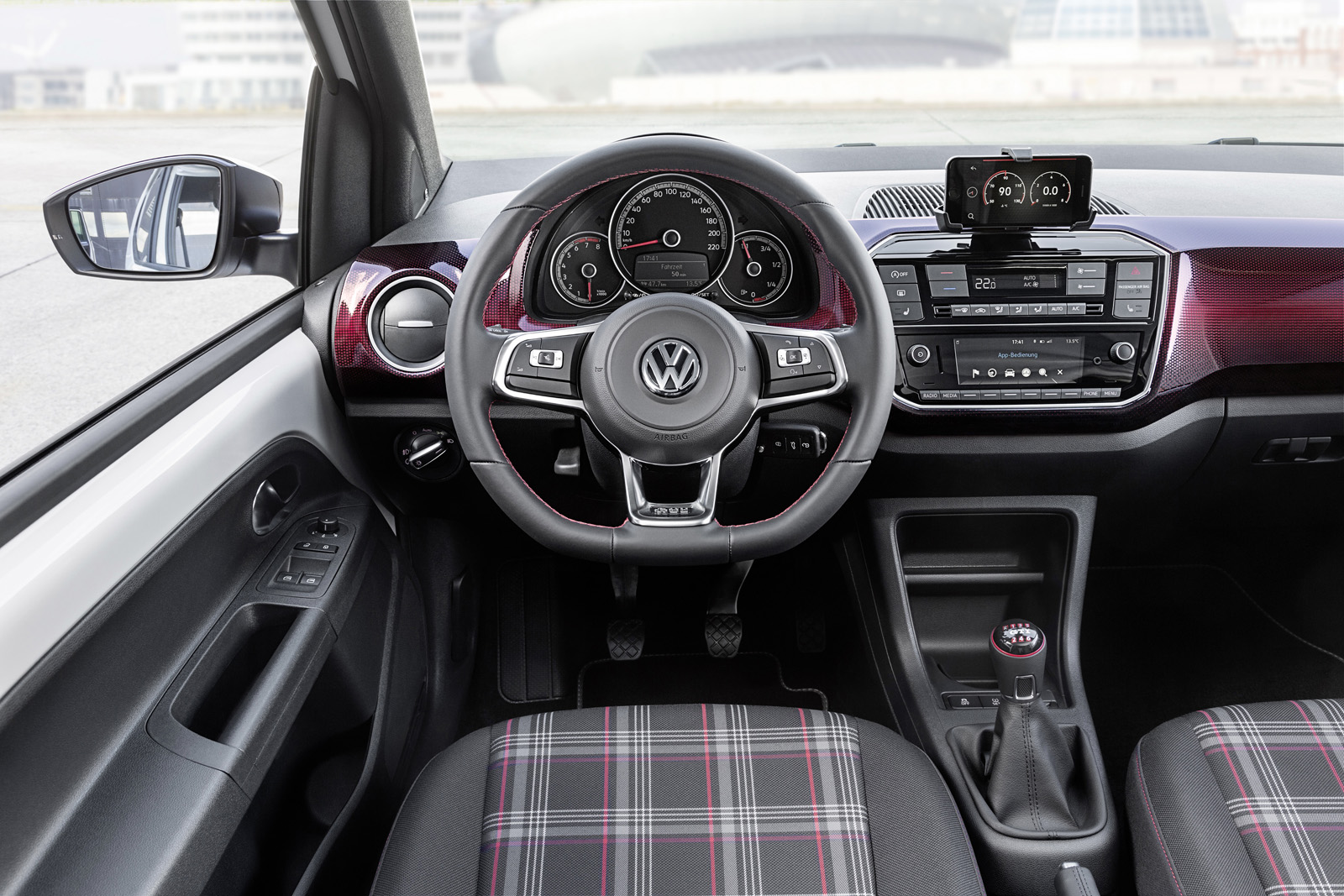


Qual o tempo dos 0 aos 100? 9 segundos?
 ]
]
Pena os travões de tambor atrás e a potência do bloco ser inferior à do Lupo GTI de 2001. Tirando isso, parece um carrinho interessante, gostaria muito de ter um. Ainda assim, será complicado escolher o carro em detrimento do novo Swift 1.0T (111cv) ou do novo Fiesta (125cv), calculo que os preços sejam similares.
São carros de segmentos diferentes, pelo que apesar de serem ambos pequenos, o Up é ainda mais.
À uns tempos vi um comparativo de uma revista? Do Brasil, no YouTube, em que o Up ganha em pista ao fiesta.
Em termos de travões, no swift não sei, mas no fiesta actual também são de tambor (no novo não sei).
Só é estranho ter menos cavalos. No Brasil ele desenvolve 105cv

video
Ah, a Volkswagen do Brasil e sua tendência de jogar MUITO pra baixo o rendimento de seus motores


