
gtabarth
New member
Lancia Delta S4[br] Que grande maquinão, era sempre a abrir...
Este já é um ECV.

Acompanhe o vídeo abaixo para ver como instalar o nosso website como uma aplicação web no seu ecrã inicial.
Nota: Esta funcionalidade pode não estar disponível em alguns navegadores.
Lancia Delta S4[br


It seems that Andrea Zagato is enjoying himself… He’s managed to squeeze under the huge steering wheel of the Sport Zagato, juggled his feet around the tiny pedals, mastered the awkward gearchange and got a hang of the buzzy little V4 engine.
Now he’s happily tearing along the dusty Californian back roads, wind in the hair, mid-day sun beating down. A couple of miles away is the busy Laguna Seca race track, but out here the traffic is quiet and we’re free to play on the twisting, swooping roads.
‘We finished the car only a month ago,’ says Zagato’s marketing manager Paolo Di Taranto as Andrea disappears. ‘This is the first chance he has had to drive it.’ Perhaps Paolo is wondering, as I am, how long it will be before Andrea reappears. Sometimes a guy can have too much fun…

Meanwhile, we chat about the car in question. Despite, or perhaps because of, the major projects going on at the revitalised Zagato design HQ at the moment – think BMW, AC, Aston Martin and Bentley most recently – this little car is a really big deal to both Paolo and Andrea, who both seem to have poured their heart and soul into it. Let’s face it, it’s not usually this easy to get the top men to come out on a photoshoot.
But this car is especially poignant for Andrea, for it’s a painstaking recreation of the one-off Lancia Aprilia Sport Zagato built by his grandfather Ugo Zagato in 1937.
Even back then, Carrozzeria Zagato was an influential company. Misfortune and war had forged Italian-born Ugo’s essential skills: in 1905 the death of his father forced Ugo to emigrate to Germany, where he found employment at a metalworks. Four years later he returned to Italy for National Service in the army, and then went on to work at coachbuilder Carrozzeria Varesina, while studying at the Santa Maria design school.

During World War One, Ugo moved to Turin and worked at aircraft manufacturer Pomilio, which proved to be a great influence on his later work, not just with aerodynamics but also in the crafting of strong but lightweight panelwork. The scene was set for Ugo to form his own company, which is exactly what he did in 1919: Carrozzeria Ugo Zagato & Co was born, based in a workshop in Milan, also the home of Alfa Romeo.
This geographical closeness paid dividends, and over the following 20 years Zagato established itself as the maker of stylish lightweight bodies, famously clothing such greats as the Alfa 6C and 8C – plus a few notable Fiat and Lancia models.

Lancia was also flying high during this period, producing innovative, striking cars that in many ways were years ahead of their competitors. The best known of those between the wars was the Lambda, but the smaller Aprilia, produced from February 1937 (the month of designer and company founder Vincenzo Lancia’s death), was similarly innovative – and it wasn’t long before the Italian carrozzerie focused their attentions on the new model.
Much of the appeal of the new model was based around its neat V4 engine and the all-independent suspension that endowed Lancias with unusually taut handling. Several versions were available: a couple of saloons, a drophead and, crucially, an unbodied rolling chassis. Zagato, Touring, Vignale, Bertone and even boat manufacturer Riva all took advantage, releasing specials of varying visual success.

The Sport Zagato, though, was quite the looker. Not necessarily beautiful, but distinctive and sleek, its profile was made to resemble the aerofoil cross section of an aeroplane wing – a nod to Ugo’s former employment and influences. Such an apparently aerodynamic shape was highly innovative, and a far cry even from other Zagato creations of the time.
Little is known of the original car, other than a handful of pictures depicting the same model in both road and race trim. What we do know is that it was one of several cars commissioned by Eugenio Minetti, Lancia’s representative in Milan. It was raced at the Targa Florio, the Targa Abruzzi, Donington Tourist Trophy and the Mille Miglia by a member of Scuderia Ambrosiana, an association of Milanese aristocrats and gentlemen drivers who shared an unlikely passion for motor sport and the Ambrosiana Inter football club.
The car was sold on to a female customer but World War Two intervened and, predictably, the little Aprilia was lost. When exactly? No one knows. Where? It’s not clear, despite the best efforts of Andrea Zagato to track it down. Paolo takes up the story. ‘The recreation was Andrea’s idea, inspired by the 100th anniversary of Lancia in 2006. The Aprilia Sport Zagato was a significant design, a one-off that was lost forever, so Andrea suggested building a recreation; Lancia wanted it too, and we found a private collector who was interested in buying it.’
In this case, ‘it’ is the first recreation of the original Aprilia Sport Zagato, painted silver in road trim, which Zagato completed in 2008 after two years of work. But the Zagato archives also contained black-and-white photographs of the Sport Zagato in its original race trim, in what looked to be Lancia dark racing red, with a leather strap across the bonnet.

Around this time, historic racer Olga Reindlova-Neulist, senior vice-president at Sotheby’s New York, happened to meet with Andrea and Marella Zagato (her partner owns an Aston DB4 Zagato)and ‘was smitten by the beauty’ of a wooden display model of the Aprilia Sport Zagato.
‘The very unusual aerodynamic shape and the fact that it was a car that raced at Targa Florio really intrigued me,’ says Olga. ‘And that was it…our endeavour started to bring back this beautiful-girl Aprilia!’ With that, the second recreation was soon underway, and the plan is now to build up to nine of these recreations as continuation models, selling for around 0,000 each.
But back to Olga’s car here... Right on cue, Andrea – rather more windswept and dusty than previously – appears over the crest of the hill and pulls up alongside Paolo and me in the Sport Zagato, looking as happy as a man with flies in his teeth could possibly look. It doesn’t take him long to take up the story.

‘The idea was to recreate a car that was lost. I saw the pictures in the archive – it’s a car that was beautiful and very innovative. It’s a very simple shape, not ornamental.
‘My grandfather would concentrate on the volume of the car, not details, and that has made the Sport Zagato an evergreen design. He was influenced by the Bauhaus movement; he wasn’t concerned with making the car elegant, but I think it turned out to be beautiful.
‘To recreate it, we took the seven or eight pictures in existence and we calculated the exact dimensions by building a “gate” or “cloud” in our virtual reality room. We’d adjust the gate until it exactly fitted each picture, so we could be 100% sure that we could recreate the car exactly as it was when my grandfather made it. It’s not just a panelbeater’s interpretation.’
With the shape CAD-modelled in this way, the Zagato craftsmen were able to match this up-to- the-minute technology to old-school construction methods, transferring the digital shapes to a wooden buck, over which the aluminium body could be formed – just as it would have been in the 1930s. Or rather better, as it turned out…

‘In 1937 they used their eyes,’ says Andrea. ‘The car was asymmetrical. The recreations are perfect; some have said they are too perfect. But what if my grandfather or Enzo had had the technology at the time? They would have used it.’
And so both of the recreations’ bodies have been made using the traditional Italian carrozzeria method of slowly panelbeating the sheet aluminium into curves to fit the wooden buck (whereas an English coachbuilder would have been more likely to wheel in the curves).
Of course, these bodies needed donor cars. This provided an altogether different challenge, because any suitable donor could not be so good that it would be sacrilegious to cut it up, but not so rotten that it was beyond saving.
For Olga’s car, the donor was found in Sicily, from the Lancia family itself. The monocoque had to be cut and the saloon body removed, then the remains strengthened and adapted, before the new body could be matched up and attached.

The Sport Zagato’s running gear and many of the add-ons – lights, steering wheel, switchgear – came from the donor Aprilia, but period tuning parts were added, including a rare twin-Zenith carburettor conversion on a desirable Nardi inlet manifold. The donor Aprilia’s wheels turned out to be too wide and would foul the rear spats, but narrower rims were tracked down in the UK.
We’re itching for another drive, so this time Andrea and I abandon Paolo and head off. It would be an easy enough car to drive if it weren’t for the seat being positioned for the petite Olga, and the long gearlever for the four-speed gearbox is cranked to such an extreme angle that it has to be pulled and pushed up and down rather than backwards and forwards.
The engine, though, is a sweet unit, smooth and revvy, quiet enough to allow the exhaust to provide the soundtrack as we barrel along. With around 80bhp, the Aprilia Sport Zagato zips up to 80mph or so – and with only the tiny aero screens for protection, it feels like twice that.
It rides well, too, and hauling that big steering wheel around shows off the nimble handling – it reacts more like a car of the 1950s or ’60s than a pre-war offering. Impressive.

You really can’t help but admire this car. When we return, Andrea and Paolo are immediately all over it, keen to show off every little detail. They carefully lift off the aluminium bonnet and lay it reverentially to one side, and we peer into the dark engine bay.
I’d forgotten how compact the Aprilia V4 is, a tiny little unit cowering in the shadow of the tall thermosyphon radiator. The dynamo is mounted on the other side of the radiator from the engine, driven via a shaft that passes through the rad itself. Next to it, twin electric fans from a modern motorcycle are the only non-period addition.

Really it’s time to go, but we’re all reluctant. The Zagato has cast a little spell on us all, a breath of fresh air in the heat and intensity of the Laguna Seca meeting. But if the car has to go anywhere, the now-smitten Andrea is going to be driving – and so he squeezes back into the cockpit, grins, waves and disappears to the sound of a fruity exhaust and a touch of period transmission whine.
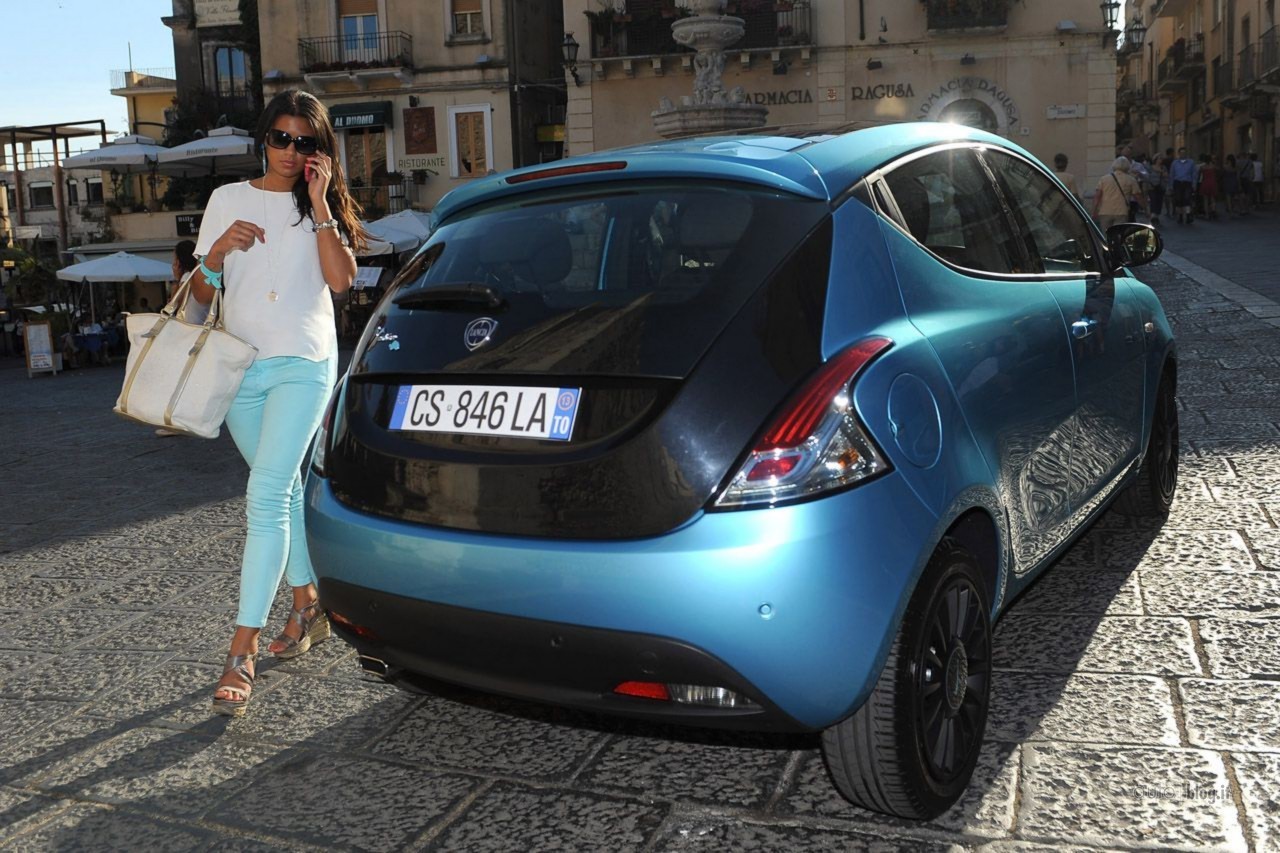
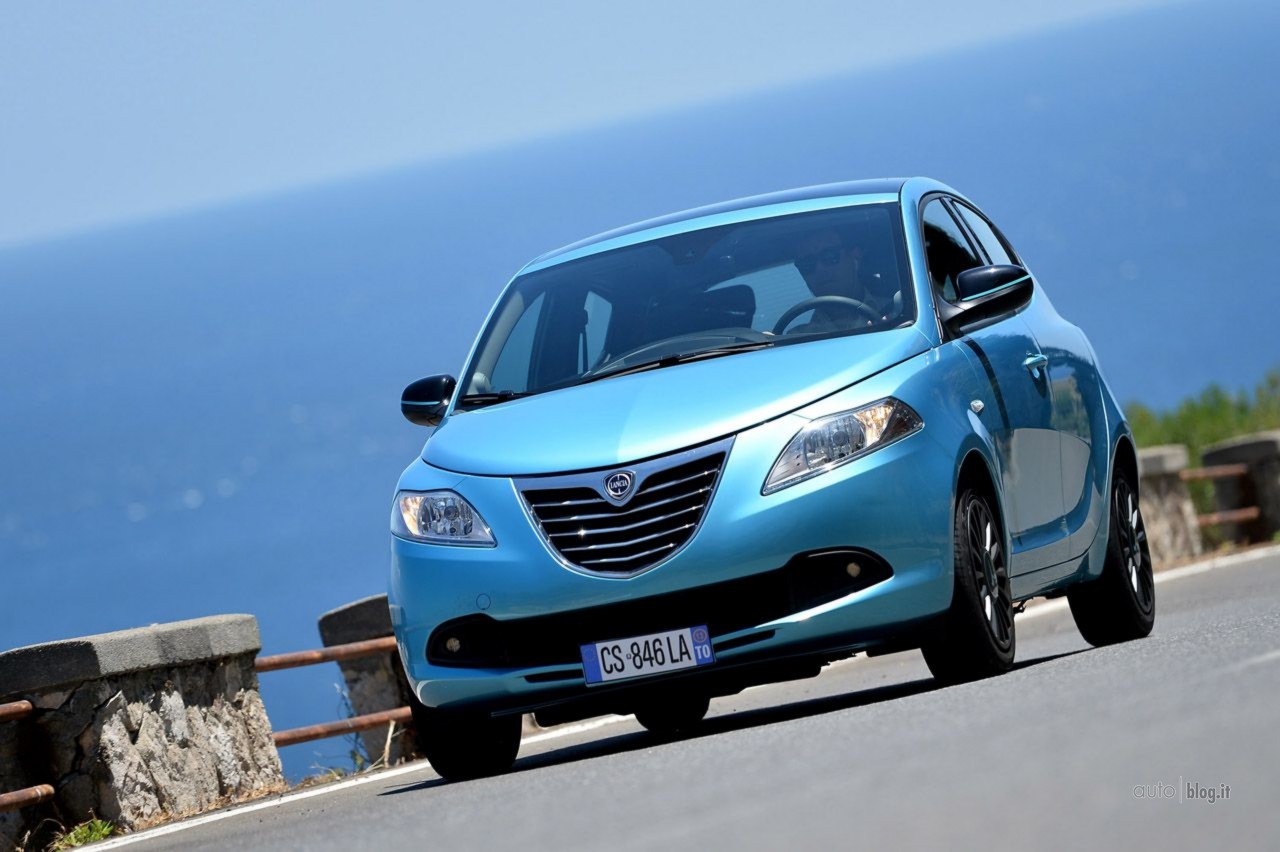
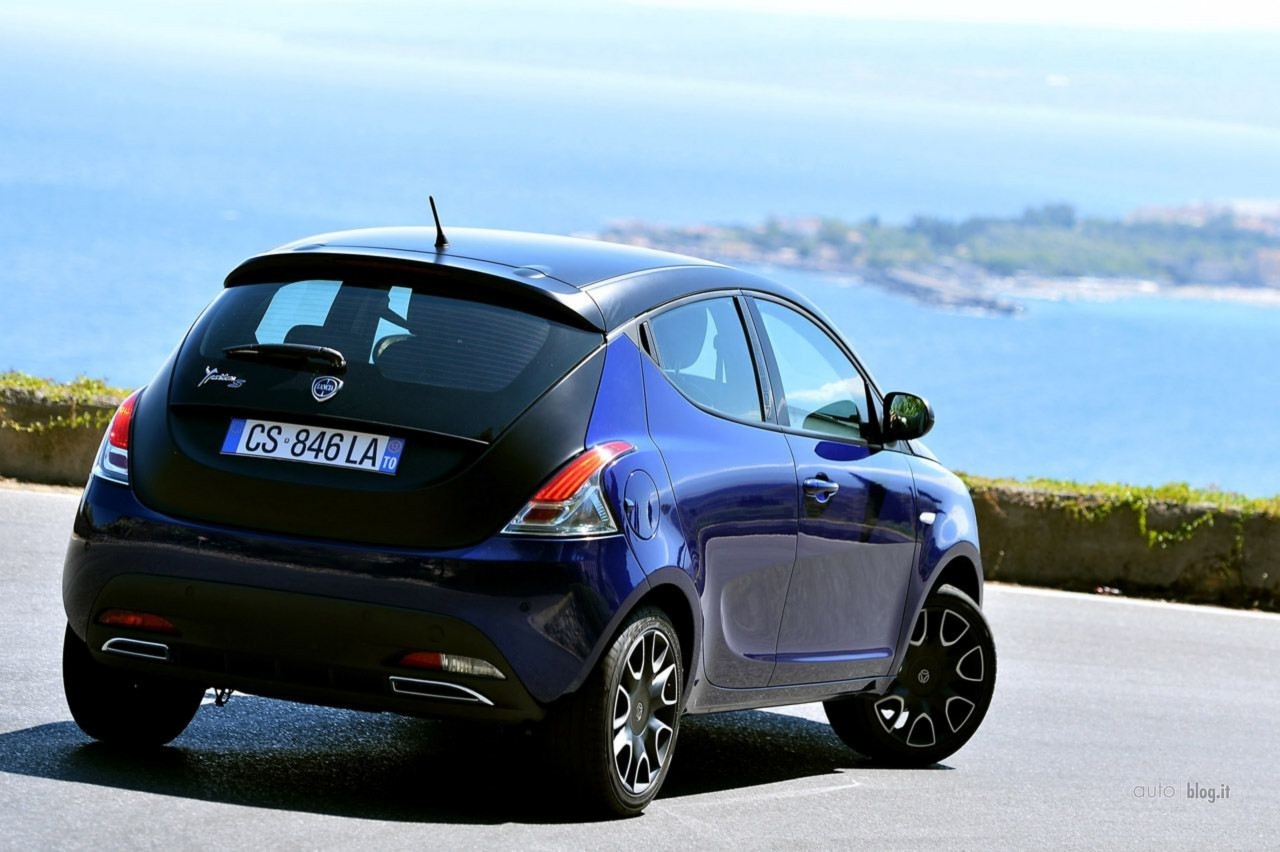
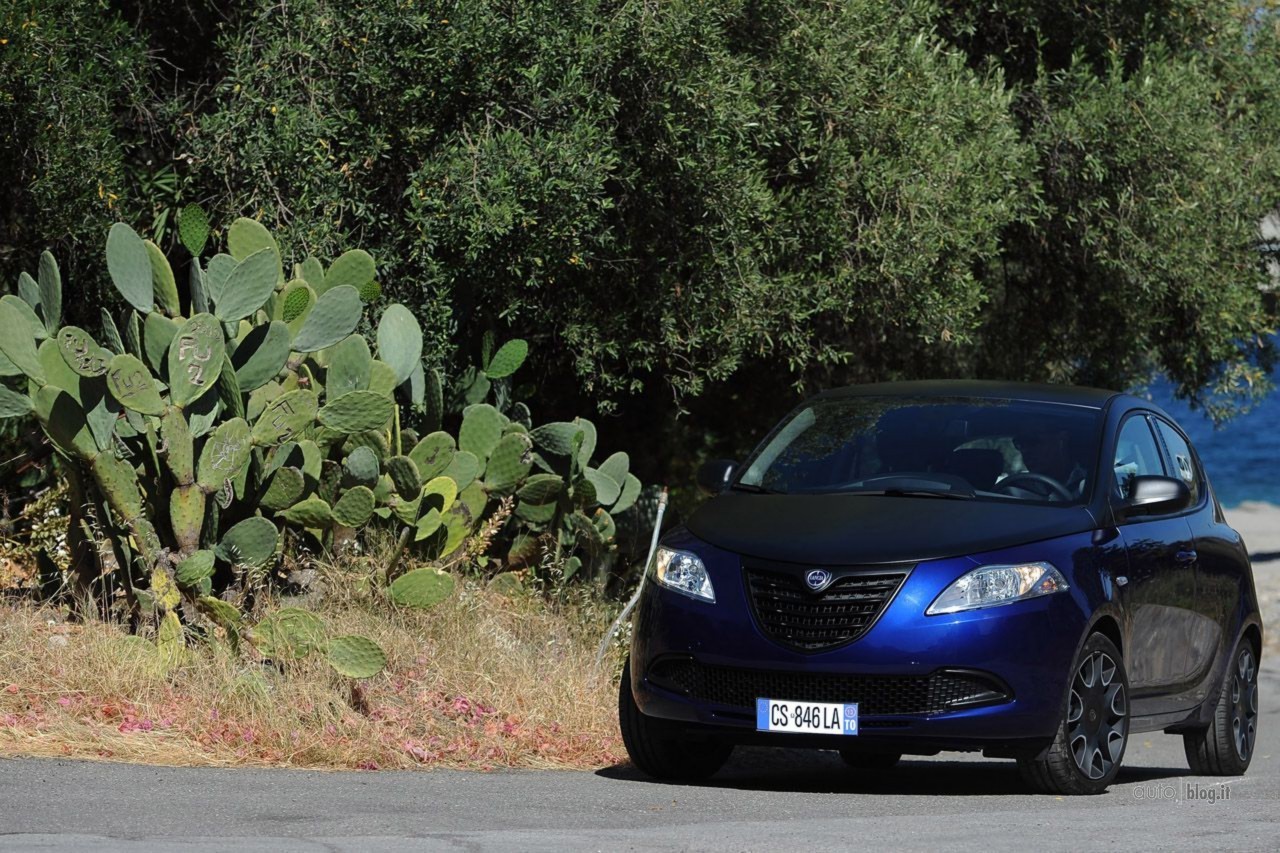


El Lancia Delta se aproxima al final de su vida comercial sin pena ni gloria. Lanzado en 2008 dos años después de presentarlo en forma conceptual, la tercera generación del compacto jugaba a medio camino entre los segmentos C y D, sustituyendo al Lybra al tiempo que buscaba atrapar clientes más enfocados hacia un compacto.
En el momento de su lanzamiento, su carrocería alta y su gran habitáculo no terminaron de encajar en la visión que muchos teníamos del nombre comercial Delta, pero la realidad es que, en perspectiva, su estampa externa ahora mismo encaja mucho más en las tendencias del diseño actual de coches.
A un año y pico de su desaparición comercial, no se puede decir que sus ventas hayan sido espectaculares. Su posición en el mercado como compacto "semi-premium", su enfoque "chic de diseño" sin carga de dinamismo, y un interior "no del todo premium", no han acabado de convencer a los compradores actuales, muy enfocados hacia lo dinámico de otras marcas del segmento (contar que un coche tiene tintes técnicos y deportivos ayuda a venderlo, aunque el cliente no los necesite).
Pero curiosamente, ahora que su fin se acerca, es cuando mejores Deltas hay en el mercado. Esta semana nos han presentado el Delta S, la variante "más dinámica" (al menos en lo estético) de las disponibles hasta la fecha, equipada con el 1,9 TwinTurbo de 190 caballos diésel. ¿Te contamos cómo se ve y cómo se mueve?

En el primer apartado, el de las diferencias estéticas, el Delta S busca diferenciarse de los modelos "más normales" de la gama a base de incorporar nuevos toques de color negro. La calandra, los marcos de los antinieblas, las llantas y la parte inferior del portón trasero se pasan por tanto al negro.
Curiosamente, las citadas llantas son las que tenía disponible el Bravo, y serán exclusivas para esta versión del Delta más dinámica. Cosas de maximizar el uso de componentes del grupo.
En el color blanco de la unidad de pruebas, con estos toques negros, el coche queda algo más masculino, es cierto, y no parece tan alto como cuando lo conocimos por primera vez. Desde un punto de vista muy personal, te diré que es un coche que no me parece para nada feo por fuera, aunque mis gustos se vayan hacia otro tipo de coche. Lo que nadie podrá decir es que le falta carácter o personalidad, pues es de estos coches que no se parecen a sus rivales.

Por dentro también hay una serie de modificaciones co-desarrolladas con los chicos de Momo Design, que han dado su opinión para dar una estética más elaborada al coche. Así, el cuadro de relojes recibe grafías en amarillo que intentan recordarnos a las del Delta Integrale (sí, lo que lees), y todo tiene toques negros, con una tapicería con el logo de Momo Design "embebido", y con costuras negras. El pomo de la palanca de cambios es de cuero, como el freno de mano y el volante.
Pero más allá de los detalles están las sensaciones. El salpicadero es soso, se mire como se mire. Así como el exterior, la carrocería, tiene algo de escultural y de diseño italiano que gusta, el habitáculo no tiene carácter o personalidad, y las piezas compartidas con el resto del grupo saltan demasiado a la vista (cuadro de relojes, plafón de iluminación, palancas tras el volante, el propio volante...). Además, los materiales del salpicadero (acolchado en una parte, duro en la superior próxima al parabrisas) no son para tirar cohetes, y los ajustes, aunque bien ejecutados, no son de micras... Basta decir que la chapa queda a la vista en los paneles de puerta traseros cuando reposas tu culo en las butacas de atrás.
En todos estos detalles, si nos miramos "el rival" (el Golf, que es el más vendido del segmento), no tenemos otra cosa que decir que, puede que sea más soso por fuera, pero tiene un interior mejor ejecutado.

Pero más allá de diseño y materiales está la habitabilidad y la técnica. El Delta es grande por dentro. Las plazas traseras tienen banqueta deslizable, con lo que puedes priorizar entre un maletero como el de un Golf, o uno más grande si lo requieres. Hay espacio más que cómodo para cuatro pasajeros adultos, y meter a un niño en las plazas traseras en una sillita infantil es sencillo, mientras el carrito cabrá perfectamente en el maletero, cuya única pega es que el borde de carga está demasiado elevado y la boca no es la más grande del segmento.
Los ajustes de la plaza de conducción son grandes, y puedes encontrar una buena posición para conducir, con la única pega de un pilar A algo intrusivo en la visibilidad. Los asientos tienen un tejido agradable, y aunque son menos duros que los de un Alfa Romeo, siguen lejos de ser tan blandos como los de un Citroën, algo que se agradece con el paso de los kilómetros.

Arrancar el motor diésel de 190 caballos es encontrar uno de los principales cambios de este coche desde que se lanzó. La cantidad de material insonorizante ha sido elevada, y ahora el traqueteo "gasóleo" ya no penetra en el habitáculo.
Meter primera es un juego de niños, con una palanca que ha mejorado en su tacto para enclavar marchas. La dirección tiene el ya famoso sistema DualDrive para maniobrar en entorno urbano sin esfuerzos, y moverse a bajas velocidades es un juego de niños, con un coche que, si bien no es pequeño para nuestros estándares actuales, tampoco resulta torpón.
Salir a carretera abierta nos confirma el enfoque del Delta. Puede que le hayan agregado una letra "ese" a su portón trasero, y hayan enfocado algo el tarado de amortiguadores a una faceta "algo más dinámica", pero sigue siendo un coche enfocado plenamente al confort. Decía Alfonso Ortín, el jefe de comunicación del Grupo Fiat para España, que "es un coche de pasajero, no de conductor". No le falta razón.

Los baches de autovía o autopista se los traga impertérrito, pero no es un coche para ir rápido disfrutando de la carretera. Y es que sus muelles y estabilizadoras son blanditas, lo que hace que se balancee, ayudado por un centro de gravedad alto. Los amortiguadores nuevos, más restrictivos, frenan los balanceos descontrolados del modelo original, pero el coche no es de esos que apoye al instante, y en curva rápida, si bien tiene una trazada consistente, tarda en apoyarse en ella y "coger actitud".
Si te metes en una carretera mucho más revirada, la cosa se vuelve algo peor. Si bien el tarado del chasis es neutro tirando a subvirador, lo cierto es que los lentos movimientos y respuestas de la carrocería condicionan mucho la agilidad. Es fácil de llevar rápido, pero no agradece que lo hagas... Es de estos coches que te piden ir tranquilo en el curva a curva.
Si lo haces, disfrutarás de silencio y confort. De un climatizador que funciona bien y... del motor. Con 190 caballos puedes pensar que se trata de un motor fogoso, pero nada más lejos de la realidad. No te da sensaciones de ser un disparo, y con un 0 a 100 en 7,9 segundos, no lo es. Tiene una curva de par plana, devora marchas, y se mueve con soltura suficiente como para afrontar cualquier viaje con soltura más que digna, pero no es un deportivo. Nuevamente, si lo comparamos con el TDI del Golf (el 2.0 150 CV), aunque tiene algo menos de chicha y prestaciones contra el crono, da la sensación de ser un motor más "deportivo" en su forma de entrega.
¿Consumos? Anuncia 5,7 de consumo medio, aunque nosotros no bajamos de 8, pero en un contacto tan breve como este, tuvimos mucho rato el pedal pisado a fondo para averiguar el carácter del chasis, por lo que necesitaríamos una semana con él antes de hablar de consumos reales.

La primera vez que probé un Delta de esta tercera generación salí insatisfecho en muchos aspectos, pero esta última revisión, con el acabado S, el nuevo aislante sonoro y demás, ha mejorado mucho el coche.
Sigue sin encajar dentro de mis "gustos personales", pero para aquellos que busquen un coche diésel con gran espacio interior, una estética diferenciada, y un chasis confortable, ahora es una buena compra.
Con un precio de 21.500€ (promoción actual), no hay nada que se le parezca en el mercado, en cuanto a motorización-tamaño-"aura aspiracional".
Si lo comparamos con sus rivales, un Golf TDI de 150 caballos ya está en los 25.000€. Sus ventajas ante el Delta están en el habitáculo (acabado, materiales, diseño) y en su comportamiento, que es más dinámico, con un tren delantero más positivo, y menos balanceo de carrocería, aunque es menos comodón.
Tal vez lo que más se parezca en enfoque "confort-extrañeza-exclusividad" sea un DS4 de Citroën, pero es mucho más caro con un motor de 160 caballos diésel (vuela por los 28.680€) y sus plazas traseras son más ajustadas.
No, yo no me compraría un Delta S (dentro del Grupo Fiat, me compro antes un Giulietta), pero si eres un cliente como el que hemos descrito, seguro que el coche puede llegar a convencerte, más con este precio. Pero esto me hace preguntarme... ¿de verdad queremos una Lancia donde "lo mejor del producto sea su precio"?


Um dos meus carros favoritos [br
] ai se eu ganha-se o euromilhoes[ ]


