
Instale a aplicação
Como instalar a aplicação no iOS
Acompanhe o vídeo abaixo para ver como instalar o nosso website como uma aplicação web no seu ecrã inicial.
Nota: Esta funcionalidade pode não estar disponível em alguns navegadores.
Está a usar um navegador desatualizado. Pode não apresentar este ou outros sites corretamente.
Deve atualizar ou utilizar um browser alternativo.
Deve atualizar ou utilizar um browser alternativo.
Hyundai IONIQ (2016)
- Iniciador de tópicos reckoner00
- Data de início

Rosmano
Well-known member
Primeiro test-drive do Ioniq.
We get an early taste of hybrid with Toyota Prius unashamedly in its sights
Verdict
4/5
It's too early to make a definitive judgement on the Ioniq, but what is clear from our early drive in the South Korean-spec model is the Toyota Prius will no longer have it all its own way in the hybrid market. The Ioniq arguably looks better, drives acceptably well and will almost certainly be cheaper to buy. That will undoubtedly be enough for many to take the plunge.
Hyundai is one of the car world’s more brazenly ambitious manufacturers – and it certainly wants everyone to know that its new Ioniq is a big deal. The latest addition to the Korean brand’s range is the world’s first model to be available with hybrid,
plug-in hybrid and pure EV drivetrains.
More than that, Hyundai is claiming that the Ioniq will deliver a driving experience with the kind of fun factor that thus far has been missing from eco-focused models.
Image 3 of 19
Image 3 of 19
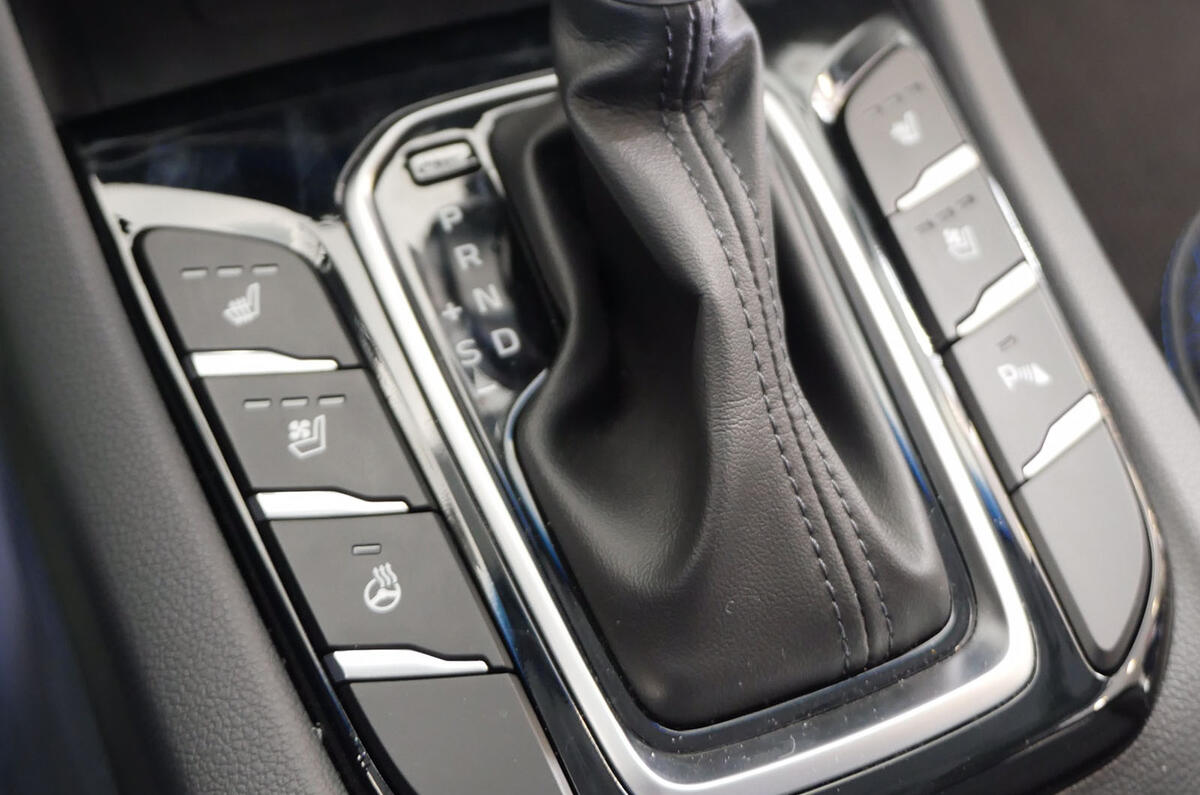
Key to this in the Hybrid, claims Hyundai, is the use of a dual-clutch gearbox – as opposed to the continuously variable transmission in key rival the Toyota Prius – paired with a 104bhp 1.6-litre petrol engine and 43bhp electric motor.
Is the hype justified? We got behind the wheel of a Korean-spec model on the roads around the capital of Seoul to find out.
• Best hybrid cars
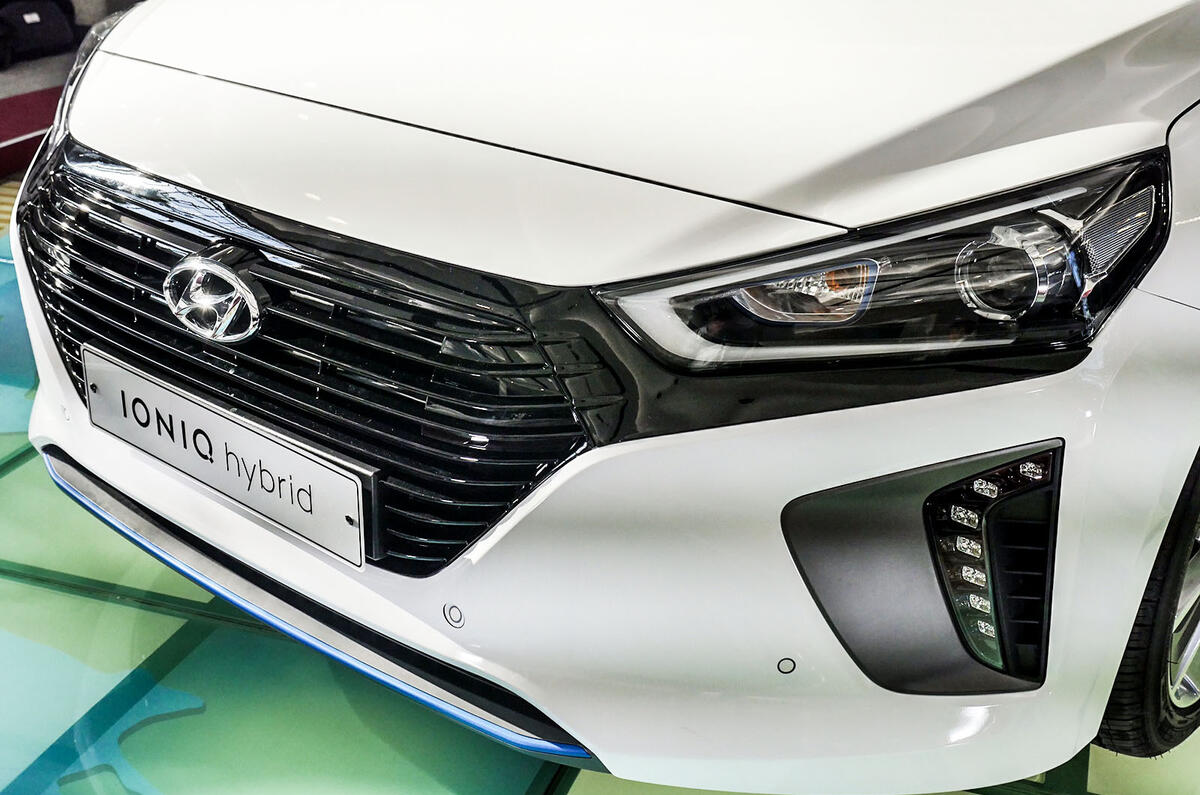
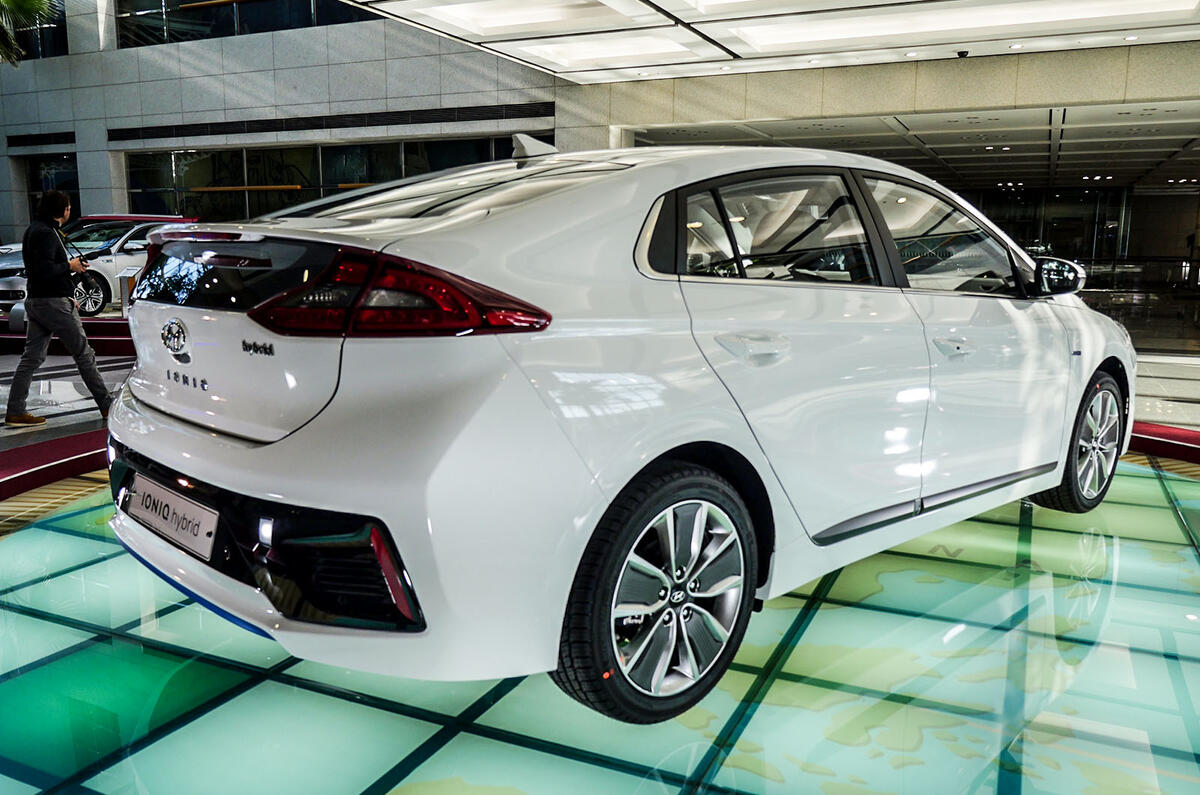
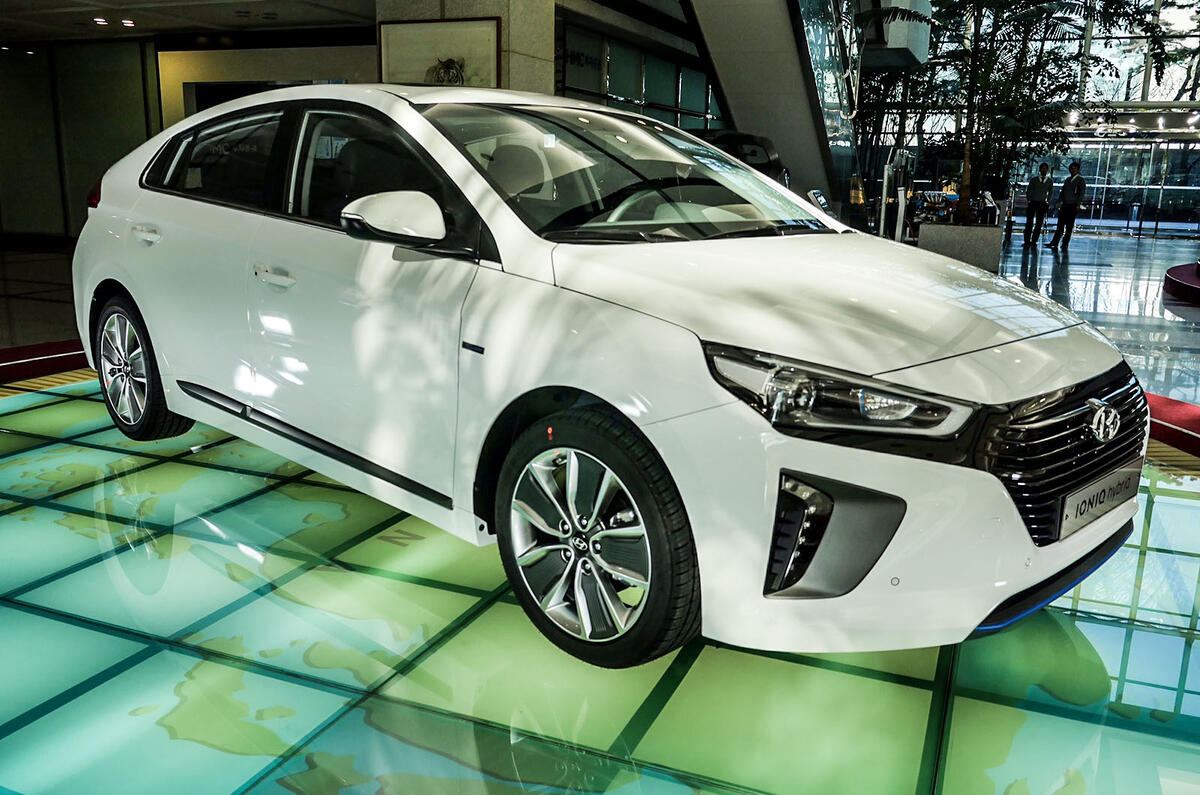
To our eyes at least, the Ioniq clearly has the edge in terms of styling over the Toyota, with its array of polarising, ungainly angles. Hyundai’s familiar hexagonal grille features at the front, while a swoopy, almost coupé-like roofline provides the slippery shape that helps it deliver, according to the firm, class-leading aerodynamic performance. You’d struggle to call it a groundbreaking piece of design, but it’s generally inoffensive.
Image 4 of 19
Image 4 of 19
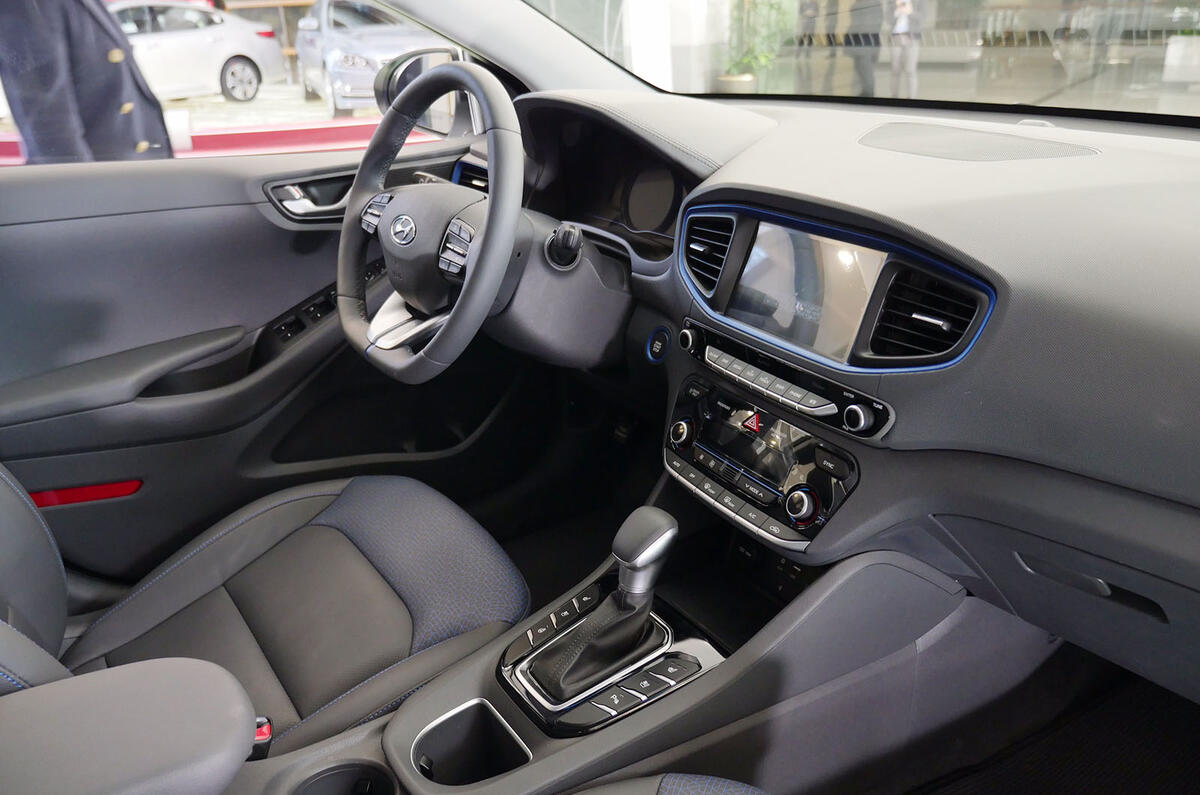
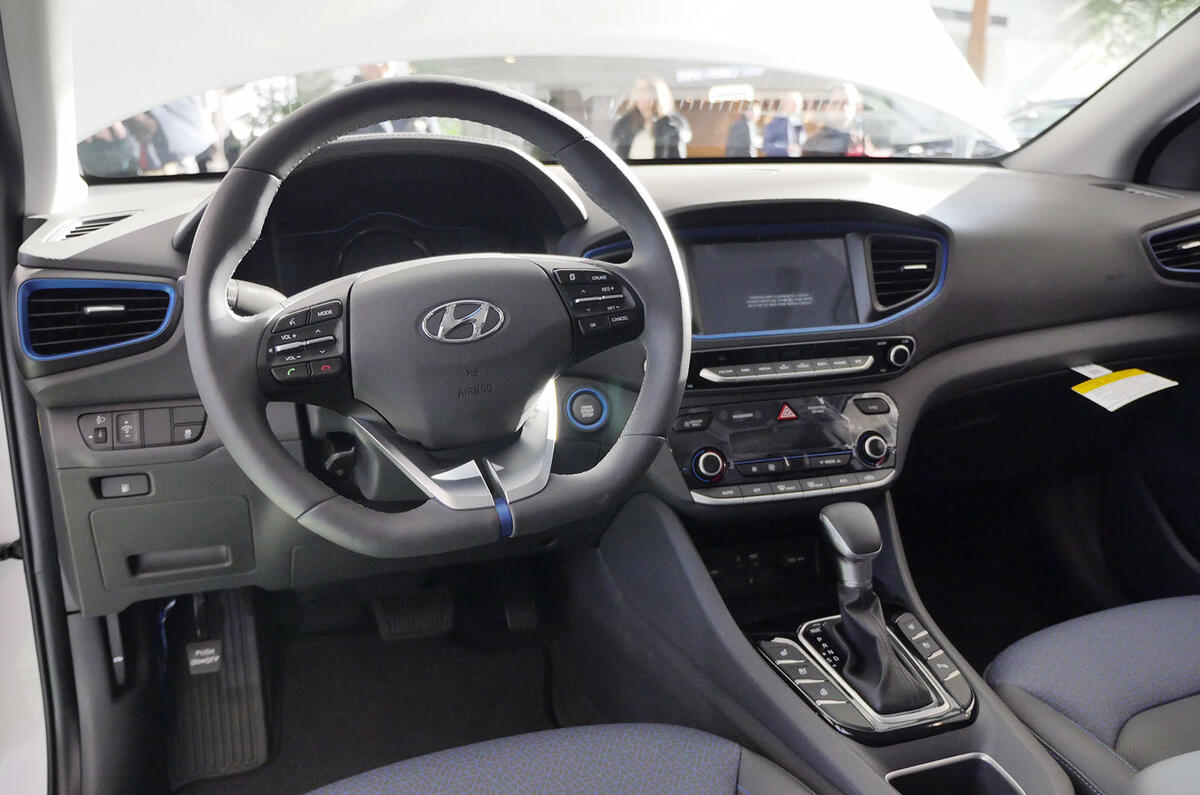
This theme continues inside, where the Ioniq is conventionally styled and as solidly built as we have come to expect of recent Hyundais. However, there are some hard plastics in less obvious touchpoints, which help to create a slightly cheap feel.
There’s no compromise on gadgets, though, with a seven-inch TFT screen information cluster and an eight-inch touchscreen available with Apple CarPlay and Android Auto compatibility. So far so good, then, but how does it fare on the road?
Image 6 of 19
Image 6 of 19
Press the blue-rimmed start button and it glides off in electric mode in near silence, although you are always aware of a slight hum from the electric motor. Up the pace and there’s no disguising the switch to petrol power, but the good news is the dual-clutch box delivers gearshifts acceptably smoothly, and there is none of the droning that has become a feature of the Prius’s driving experience over the years.
Is it fun? In Eco mode that’s overselling it, but move the DCT over to Sport and there is a tangible difference. Later gearshifts and the use of more engine power make the car feel genuinely quite engaging (considering it’s a hybrid), and the orangey glow that lights up the rev counter reflects the fact the driving experience has taken a turn for the better. The ride is decent enough, too, but occasional road noise and the engine’s tendency to strain at higher speed are areas Hyundai might look at before the car goes on sale in October.
Of course, for many people the key to this model will be its figures, and at this early stage, we can only go on the Korean stats for comparison. In terms of price, the Ioniq stretches from £13,260 to £16,144 in its home market; the Prius Mk3 in contrast ranges from £18,075 to £23,640. Clearly Britain will be more expensive, but Hyundai will undercut the Mk4 Toyota Prius.
Image 16 of 19
Image 16 of 19
Fuel economy on the Korean cycle equates to 63.3mpg; the Prius Mk3 is 59.3mpg. And in terms of CO2 emissions, the Ioniq is targeting 81g/km (vs the Prius’s 89g/km; the UK Prius Mk4 is 76g/km).
So there’s not much in it, then. That being the case, we expect the Ioniq’s coherent styling and decent drive to woo a fair swathe of buyers who previously might automatically have plumped for the Prius.


PePa
New member
Mas foi só isso que tiraste do video?
A média (6.5l/100) de uma hora de condução de um modelo completamente novo, não rodado, e em test drive, onde é referido que não olhou à economia... É provavelmente o que menos interessa do video.
Tudo o resto gostei muito do feedback dele, não é aborrecido de conduzir, é mais tradicional na experiência de condução e bastante dinâmico.
Ok, já percebemos que o Prius certamente conseguirá fazer melhor. E dado o know how e target dele também era melhor que não o fizesse. Mas é cedo para conclusões a este respeito

Para um Prius nas mesmas condições fazer esse consumo, já é preciso uma condução algo descuidada...
super descuidada [
 ] Ou então ser jornalista de determinada publicação do mundo automóvel e andar a forçar o modo EV a pensar que assim os consumos vão ser menores [8b][
 ][][]
][][]
PePa
New member

Germany
Banido
Que boa contribuição apr
eu dirigiu-te a palavra? Se não gostas de ouvir verdades temos pena
PePa
New member
eu dirigiu-te a palavra? Se não gostas de ouvir verdades temos pena
Agora tens que me dirigir a palavra para poder comentar? Tá giro.
Se não gostas de ver os teus comentários parcos em conteúdo comentados, temos pena, mas isto é um fórum.
reckoner00
Well-known member

Rosmano
Well-known member
Review do Electrek ao Hyundai Ioniq EV. Parece que gostaram mesmo muito da versão eléctrica, e tendo em conta o site que é, isso é bom sinal.
Também vai ter uma versão com autonomia de mais de 300km em 2018!
Também vai ter uma versão com autonomia de mais de 300km em 2018!
Última edição:
PePa
New member
Tive oportunidade de fazer a rodagem a um Ioniq Hybrid que aluguei recentemente. Foi-me entregue com 12 milhas, e devolvido com 907 [kiss]
Um bom test-drive de 1400 km.
Gostei mais do que esperava, confortável, materiais e qualidade acima do que eu esperava.
Bastante espaço para passageiros, arrumações e mala, 3 trolleys + uma mala grande cabiam perfeitamente c/ o separador fechado, apenas o acesso era algo alto.
A transmissão funcionava de forma suave, tinha vários menus para brincar e ver o que se passava.
Tinha basicamente 3 modos, eléctrico, ICE + Eléctrico a dar força às rodas, ICE a dar força às rodas e a carregar as baterias.
Com cuidado e sem grandes declives consegue-se rolar até 60/80 em modo eléctrico apenas, mesmo a 120 se o declive ajudar desliga o ICE.
A carga da bateria repunha-se rapidamente quase só com travagens regenerativas. Só em subidas (talvez por ir carregado) se notava o motor a manter a rotação mais do que seria desejável.
Dinamicamente não deu para puxar por ele, conduzir no estrangeiro, com o volante do lado errado e com companhia limitou essa parte, mas gostei da direcção direta e não demasiado filtrada e não adornava nem se sentia o peso mesmo lotado.. Também acabei por não usar as patilhas de passagem de caixa.
Destaco o "lane keep assist" a dar toquezinhos para me manter dentro da faixa, qual instrutor de condução de toque delicado, foi útil nas estradas estreitas onde andei.
Ah e tal e consumos?
Ora bem, só medi o primeiro depósito, 4 pessoas, mala cheia, condução suave a cumprir os limites num misto de nacionais e AE - 4.8l /100
Cá está ele, azulinho como eu gosto:

Um bom test-drive de 1400 km.
Gostei mais do que esperava, confortável, materiais e qualidade acima do que eu esperava.
Bastante espaço para passageiros, arrumações e mala, 3 trolleys + uma mala grande cabiam perfeitamente c/ o separador fechado, apenas o acesso era algo alto.
A transmissão funcionava de forma suave, tinha vários menus para brincar e ver o que se passava.
Tinha basicamente 3 modos, eléctrico, ICE + Eléctrico a dar força às rodas, ICE a dar força às rodas e a carregar as baterias.
Com cuidado e sem grandes declives consegue-se rolar até 60/80 em modo eléctrico apenas, mesmo a 120 se o declive ajudar desliga o ICE.
A carga da bateria repunha-se rapidamente quase só com travagens regenerativas. Só em subidas (talvez por ir carregado) se notava o motor a manter a rotação mais do que seria desejável.
Dinamicamente não deu para puxar por ele, conduzir no estrangeiro, com o volante do lado errado e com companhia limitou essa parte, mas gostei da direcção direta e não demasiado filtrada e não adornava nem se sentia o peso mesmo lotado.. Também acabei por não usar as patilhas de passagem de caixa.
Destaco o "lane keep assist" a dar toquezinhos para me manter dentro da faixa, qual instrutor de condução de toque delicado, foi útil nas estradas estreitas onde andei.
Ah e tal e consumos?
Ora bem, só medi o primeiro depósito, 4 pessoas, mala cheia, condução suave a cumprir os limites num misto de nacionais e AE - 4.8l /100
Cá está ele, azulinho como eu gosto:

PCasal
Well-known member
Este modelo importado da Alemanha é uma excelente compra. Com poucos meses consegue-se a versão Plug-in por menos de 30000.
Fora a legalização....

nokia71
New member
Fora a legalização....
Com legalização incluída.
Os impostos aplicados sobre Hibridos plug-in são muito mais baixos que o normal.
PCasal
Well-known member
Não querendo parecer ignorante, os valores mais baixos que encontro de venda na Alemanha da versão Plug in são na ordem dos 25k 26k. A legalização fica inferior a 4.000€ ?
Vem-se pontapés da versão Híbrido mas plug in vejo poucas e bem bem mais caras, nem sei se compensa dada a diferença de preço.
Vi que começaste um topico com alguma, vaga, informação sobre isso mas que depois deixaste morreu o topico. Chegaste a comprar alguma coisa ou a comprovar aqueles valores?
Vem-se pontapés da versão Híbrido mas plug in vejo poucas e bem bem mais caras, nem sei se compensa dada a diferença de preço.
Vi que começaste um topico com alguma, vaga, informação sobre isso mas que depois deixaste morreu o topico. Chegaste a comprar alguma coisa ou a comprovar aqueles valores?
Última edição:
nokia71
New member
Não querendo parecer ignorante, os valores mais baixos que encontro de venda na Alemanha da versão Plug in são na ordem dos 25k 26k. A legalização fica inferior a 4.000€ ?
Vem-se pontapés da versão Híbrido mas plug in vejo poucas e bem bem mais caras, nem sei se compensa dada a diferença de preço.
Vi que começaste um topico com alguma, vaga, informação sobre isso mas que depois deixaste morreu o topico. Chegaste a comprar alguma coisa ou a comprovar aqueles valores?
Não. Não se chegou a avançar para a compra pois optou-se por esperar por modelos que estão para sair.
Mas Pelo que tenho visto, principalmente em relação ao golf, já há stands a importar os cujos.
No caso do ioniq, embora ainda haja pouca oferta, já se veem lá fora algumas boas oportunidade. Mas sem dúvida que um híbridos plug-in o que se encontra mais é o golf.