
BLADERUNNER
Well-known member
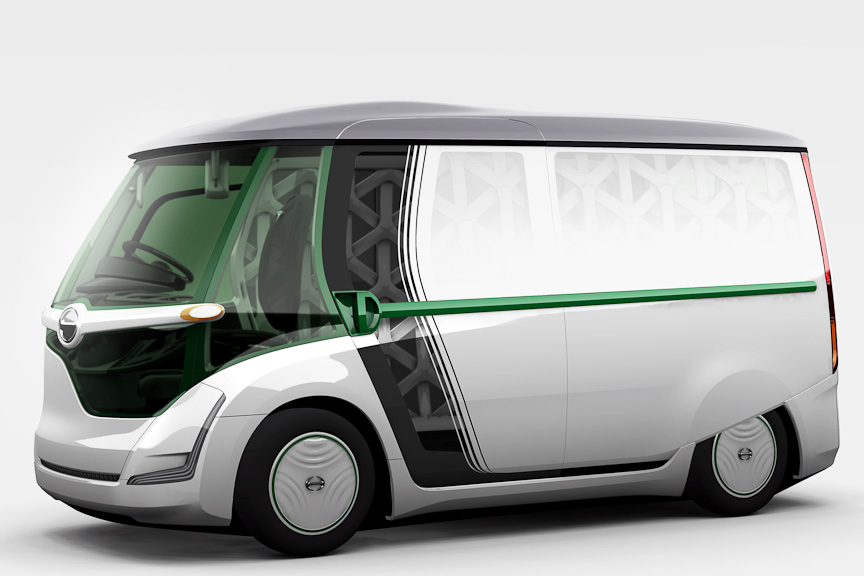
Toyota Hino EV concept - será apresentado no Salão de Tóquio.

Acompanhe o vídeo abaixo para ver como instalar o nosso website como uma aplicação web no seu ecrã inicial.
Nota: Esta funcionalidade pode não estar disponível em alguns navegadores.

 ]
] Uploaded with ImageShack.us
 ])
])Toyota Plans to Sell a €100,000 Fuel Cell Car in Europe by 2015

[2007 Toyota Hybrid X Concept na imagem acima]
There’s no doubt that Toyota, with its Prius, is the carmaker that made hybrid cars an everyday word in our vocabulary. Granted, other companies like Honda with its first, odd-looking Insight, offered their own models, but it was the best-selling Prius that made hybrid cars popular to the masses.As emission regulations become tougher though, even Toyota is looking for ways to offer even “greener” cars. All-electric vehicles like the Nissan Leaf are one option. But Toyota wants to go the extra mile and launch a new fuel cell model in Europe by 2015.
Toyota is not the first carmaker to manufacture a hydrogen-powered car as most major car companies have created fuel cell prototypes. For example, Honda launched the FCX Clarity in 2008, but it is only available for lease for a limited number of customers.
Toyota’s zero-emissions hydrogen car will actually be sold in the European market in four years’ time – albeit again, at limited numbers, since it will have a very high price tag due to its extremely advanced, and thus costly, technology.
"We could expect a fuel cell vehicle to retail at about €100,000 [US$138,000] in Europe," Toyota Europe Vice President for Product Planning & Marketing, Alain Uyttenhoven, told Automotive News.
The Toyota exec, however, does not diminish the importance of hybrid models, on which Toyota has recently decided to base its recovery: “We see pure battery-powered vehicles to be just a solution for small trips in the city, while a plug-in gasoline-electric hybrid is the best solution for both weekday urban commuting and weekend trips,” Uyttenhoven added.
Now, 100,000 euros for a futuristic fuel cell car is quite a lot, and Toyota is entering unchartered waters competing with brands that have much more cache, even if their offerings pollute more.
Will the fuel cell Toyota prove to be the Prius of deep-pocketed Europeans? Only time will tell.
Toyota Plans to Sell a €100,000 Fuel Cell Car in Europe by 2015 - Carscoop

Toyota CEO Says to Company Must Build Cars that "Make People Happy"

Earlier this year, young people offered a job at Toyota were invited to the Japanese company’s test track. As they waited to be introduced to the firm's race drivers, a lone Lexus LFA drove around the track, mesmerizing them with the howling screams of its V10 engine.No one knew who the man behind the wheel was. Only after he stepped out and formally introduced himself did they learn that it was the company’s CEO, Akio Toyoda. “I asked them if they like cars”, said Toyoda. “If they didn’t, they shouldn’t bother joining.”
When he assumed his duties in June 2009, the 55-year old grandson of Toyota’s founder said that he wanted his company to build cars that “made people happy”.
He did not know it at the time, but it was a rather unfortunate choice of words. Less than six months later, Toyota, which up to this point had built a reputation as a manufacturer of reliable cars, had to face the unintended acceleration safety issues in the U.S. that sprouted massive and costly recalls.
Then, as the company seemed to get back on track, a massive earthquake in Japan seriously hampered production, resulting in even more losses and relegated Toyota from first place to third, behind GM and VW.
Add the strong yen, which makes manufacturing cars in Japan unprofitable, and the recent Thai floods that have once again curtailed parts supply, and you can say that Toyoda has had his share of bad luck since Toyoda took over.
However, this streak of bad luck has not made Toyoda change his mind one bit. He is not your regular CEO: one month before his appointment, he raced in the Nurburgring 24-hour endurance race in an LFA prototype under the nickname “Morizo” – and he did it again this year.
He is a self-confessed car guy and speaking to Reuters, he acknowledged that Toyota has taken quite a beating these past couple of years and may no longer be “the beast”, as rival Nissan CEO Carlos Ghosn had said, but it can certainly try to be a beauty.
Analysts agree that, apart from the financial loss, the most valuable thing Toyota has lost is its image as a maker of quality cars. “Toyota can’t get by with its quality reputation anymore. Fairly or unfairly, that’s been tarnished by the recalls”, says auto analyst Kurt Sanger of Deutsche Securities.
“But even before that, the other guys were getting better while introducing more interesting products. For Toyota to just continue to do what it was doing was not an option. It ignored that for a while.”
When Toyoda was interviewed by Larry King after the U.S. Congress investigation, the host had one last question: “What car do you drive?”
Toyoda remembers his exact thoughts: “Should I say Prius? Would that sound good? But then I decided to just let go and I felt a smile return to my face. I told him ‘I drive about 200 a year. I love cars.’”
He has no qualms about recognizing his rivals’ strengths: “I think Hyundai is making great cars, and in some ways I think we are trailing them”, he admitted in an interview. This is reflected in the two companies share prices: Hyundai’s have increased by 25% this year, while Toyota’s are down 20%.
Toyoda remains committed to turning his company around: “It’s like Steve Jobs said”, he commented referring to the late Apple founder and CEO Stanford University speech in 2005. “Stay hungry. Stay foolish. Those words really spoke to me.”
He is a hands-on guy, as well. In April, he drove the new Lexus GS 350 around the Nürburgring. He then ordered it to be re-engineered so that the production version would have a more rigid chassis, better suspension and less body roll. After sampling the 2012 Camry, he sent it back to the drawing board for major changes, especially in the interior.
If Jobs is the man who made Toyoda think hard about his attitude towards business, Hiromu Naruse, Toyota’s top test driver who was killed in an accident in an LFA outside the Nürburgring, was the person who made him get behind the steering wheel after being criticized for being ignorant about the finer points of driving.
The Lexus IS-F was a hit-and-miss first effort, very close on paper to its chief rival, the BMW M3, but never really threatening it in the real world.
The LFA was a huge improvement, although with a limited run of only 500 cars and a stratospheric price tag, it's not really a measure of the company's true nature.
Toyoda’s first test about building cars that “make people happy” comes in a few weeks with the unveiling of the FT-86 rear-wheel drive coupe. It will be the first real sports car bearing the Toyota name after the demise of the MR2 and the Celica.
Will it justify all the fuss about being a true, fun to drive sports car, and more importantly, will it herald a new era for Toyota, as its CEO wants? Guess we will just have to wait and see.
Story References: Reuters
Toyota CEO Says to Company Must Build Cars that "Make People Happy" - Carscoop

Toyota quer que os seus próximos veículos sejam "Intel Inside"
¿Qué puede ser tan interesante de los centros multimedia para automóviles que Intel no deja de buscar nuevos socios entre los fabricantes? Pues para empezar, el explosivo crecimiento de estos aparatos. La reducción de costes y la eclosión de mercados como China han hecho que el "coche online" se haya convertido en el tercer producto tecnológico de más rápido crecimiento en todo el mundo según la coalición de empresas Mobile Future (sólo por detrás de teléfonos móviles y tablets), y tanto Toyota como Intel quieren su pedazo del pastel.
Ambas compañías han anunciado su propósito de estudiar de forma conjunta el desarrollo de nuevos equipos de audio, vídeo e información para automóviles, que cada vez requieren más potencia de procesamiento debido a la integración de mapas 3D, aplicaciones, funciones sociales y navegadores de internet entre otras funciones avanzadas que hasta ahora eran exclusivas de los ordenadores. Además, Intel y Toyota sólo están interesadas en los chips que usarán los nuevos aparatos, sino también en el desarrollo de nuevas interfaces que permitan integrar de forma transparente tu teléfono móvil con el navegador, algo en lo que el fabricante japonés lleva trabajando desde hace un tiempo.
Rumor: Toyota negoceia com a BMW a compra de motores diesel
A veces tenemos la impresión de que BMW es la compañía más ligera de cascos de toda la industria. No contenta con una mantener una exitosa relación formal con PSA Peugeot Citroën, que no hace mucho se amplió también al desarrollo de mecánicas híbridas, la hélice blanquiazul ha firmado acuerdos para suministrar motores a Fisker e incluso Saab (si bien no pondríamos la mano en el fuego por la vigencia de dicha alianza). Ahora, estaría negociando la venta de nuevos propulsores diésel a... Toyota. Que ya son palabras mayores.
Según el diario nipón Nikkei, Toyota Motor y BMW se encuentran discutiendo una alianza que facilitaría a los japoneses nuevos propulsores diésel, aparentemente, bloques con dos litros de cilindrada especialmente apropiados para sus modelos medianos comercializados en Europa, donde las cosas no le están yendo particularmente bien.
Este acuerdo de suministro sería económicamente más ventajoso para Toyota que seguir fabricando internamente todos sus motores, y ofrecería a BMW la posibilidad de utilizar la tecnología híbrida de los japoneses, ahora que tan volcada está en el desarrollo de vehículos verdes tanto para su propia marca como para su nueva división i.
¿Sorprendido? Nosotros un poco, aunque tal vez no deberíamos. Pese a que Toyota es uno de los mayores fabricantes del mundo y está volcada en mejorar sus cifras en Europa, lo cierto es que no es rival para BMW, y aunque Lexus sí podría convertirse en un estorbo, la división premium de Toyota prefiere resolver los problemas de emisiones a través de sus mecánicas híbridas a gasolina. Sea como sea, BMW ha demostrado que no tiene reparos en vender sus motores al mejor postor, y ahí tenemos el antiguo Opel Omega DTI para demostrarlo...

Um Yaris 316 D (isento de problemas, claro) nem era mau pensado [] [kiss]
]
qual suposto supra?
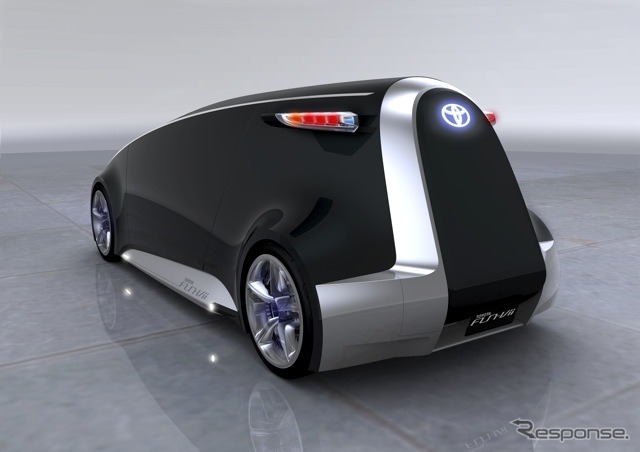
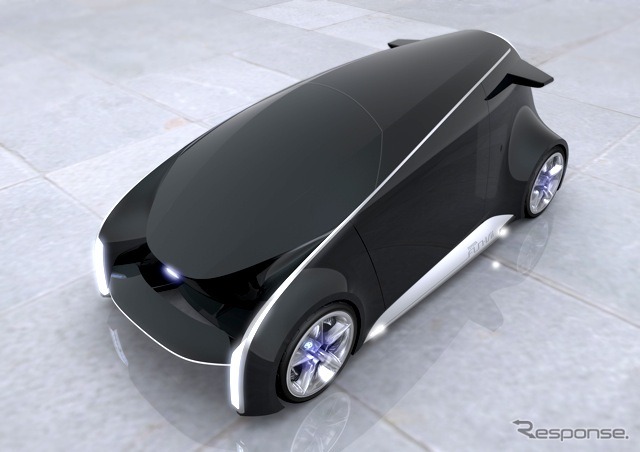
Toyota Fun VII concept
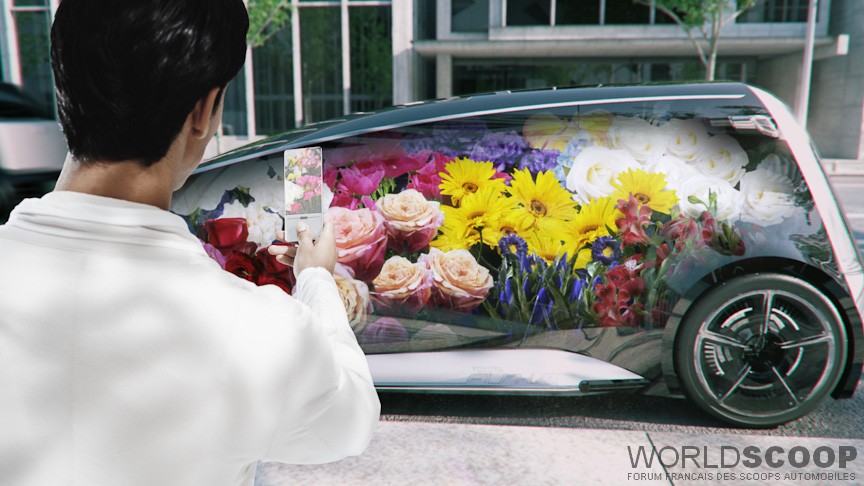
The ultimate in personalization functions offer the ability to alter the content displayed on the interior and exterior of the Fun-Vii with the same ease as downloading an application. For instance, the whole vehicle body can be used as a display space, with the body color and display content changeable at will. This allows the entire vehicle to function as a terminal for displaying messages or other information.
The whole of the vehicle interior also can function as a display space, with the interior freely adjustable to match the mood of the moment. Content such as navigation information is blended seamlessly into the interior through the use of augmented reality. Furthermore, the vehicle’s “navigation concierge” can provide the passengers with driving information and guidance through a vocal interface.
A network update function makes sure the software versions for the vehicle’s drive, control and multimedia system are always up-to-date.
The Fun-Vii is able to link with surrounding vehicles and infrastructure, allowing it to detect other potentially hazardous vehicles—such as vehicles in blind spots—in advance, or to connect with friends who are driving nearby.
Operation of the Fun-Vii is not limited to inside the vehicle itself, with a portion of the vehicle’s functions access able remotely via a smartphone or other mobile communication device.
Jokejoe




Oficial: É assim o renovado Toyota Land Cruiser 200
Tras las filtraciones que ya publicamos hace unas semanas, ahora volvemos con el Land Cruiser 200aunque esta vez para mostrarte las imágenes oficiales publicadas por Toyota Japón. Para ver las variantes específicas del mercado europeo habrá que esperar al Salón del Automóvil de Bruselas que abrirá sus puertas entre los días 12 y 22 de enero.
Los cambios realizados no son especialmente importantes, aunque añaden un toque moderno que agradece el conjunto general de este todoterreno de lujo. Entre lo más destacable podemos mencionar:
· Ópticas delanteras con iluminación diurna LED
· Paragolpes más envolventes
· Parrilla frontal rediseñada
· Equipos de sonido actualizados
En cuanto a los motores, en Japón se ofrece con un renovado 4.6 V8 con 318 CV de potencia y un par máximo de 460 Nm, asociado a un cambio automático de tipo tradicional. Los precios recomendados arrancan en los 4,4 millones de yenes, unos 56.400 dólares/43.174 € al cambio actual.


