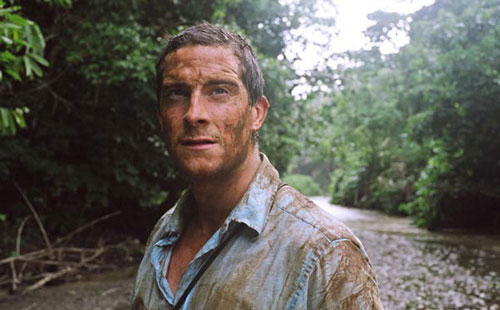
Programa do Discovery Sobrevivencia o que acham?

Vês como estás errado? é só heróis aqui no fórum [:)] Já vi em vários programas de televisão que não se deve beber água do mar em circunstancia NENHUMA. Se estiveres completamente desidratado e a morrer à sede, a água do mar só te faz pior. Resseca-te muito mais dando-te inclusive muito mais sede! Além do mais, o teu corpo para se ver livre do sal, faz-te urinar muito mais, deixando-te ainda mais necessitado de àgua. Rematam ainda, dizendo que é um erro comum dos novatos que se aventuram no mar.


Lamborghini, não percebo esse exultar, mas percebo que te tenhas precipitado.

Tal como o Nthor teve o cuidado e amabilidade de te explicar a minha linha de raciocínio ( o meu obrigado [;)] ), fica bem patente o que coloquei sobre o consumo de água salgada enquanto um recurso de "água potável".

Acresce ainda que ... no EXTREMO e sempre em caso de EXTREMO, a ingestão de água salgada pode ser considerada, desde que a mesma possa ser acompanhada com 60% de ÁGUA POTÁVEL DOCE.
Há quem afirme que se pode pode diminuir esta percentagem de água doce até 40%, mas já será considerada uma situação de risco.


Existe o relato não confirmado (por fontes independentes) de um navegador - Dr. Bombard - que afirma ter sobrevivido a ingerir somente água salgada, mas além de não confirmado é altamente improvável, dado que na mesma viagem ele afirmou ter recolhido também Água da Chuva. (lá está a tal mistura de água doce com água salgada)
A Teoria do Dr. Bombard aliás é a de que um naufrago pode acostumar o seu organismo, começando a ingerir pequenas quantidades de água salgada previamente.

Outra situação que o Dr. Bombard afirmava como exequivel era "retirar água dos grande peixes", (atum ou tubarão) afirmava que isto era o que faziam os povos da Polinésia nas suas travessias ou quando estavam perdidos no pacifico.
Consistia em Executar um corte em "V" no peixe pressionar para extrair, e o liquido obtido seria misturado com água salgada, ele afirmava que era tragável a mistela obtida. :sh)
 
Dr. Alain Bombard

Dr. Alain Bombard

Sobre Alain Bombard e a sua experiência como navegador solitário, vivendo de placton, peixes e água salgada.

Alain Bombard (October 27, 1924 - July 19, 2005) was a French biologist, physician and politician famous for sailing across the Atlantic Ocean in a small boat.


Alain Bombard was born in Paris. He theorized that a human being could very well survive the trip across the ocean without provisions and decided to test his theory himself in order to save thousands of lives of people lost at sea.


On October 19 1952 Bombard began his solitary trip, after visiting his newborn daughter in France, across the Atlantic for the West Indies. He had sailed in the Atlantic Ocean solo before, from Tanger to Casablanca (August 13 - August 20), and from Casablanca to Las Palmas (August 24 - September 3), however the original plan was to sail across the Atlantic with a friend, English yachtsman Jack Palmer, with whom he sailed just before from Monaco to Minorca (May 25 - June 11), but Jack abandoned Alain in Tanger.


Bombard sailed in a Zodiac inflatable boat called l'Hérétique, which was only 4.5 meters long, taking only a sextant and almost no provisions.
Bombard reports he survived by fishing (and using fish as source of both fresh water and food) with a self-made harpoon and hooks and harvesting the surface plankton with a small net.


He also drank a limited amount of seawater every day. On the October 23, 4th day of the journey Bombard had to mend a torn old sail, while the backup sail was blown away. On the 53rd day of the journey he encountered a ship. The crew told him that he was still over thousand kilometers short of his goal. However, after the ship's crew offered him a meal, Bombard decided to go on. Bombard reached Barbados December 23 1952 after 4400 km of travel. Bombard had lost 25 kg and was briefly hospitalized. He published a book entitled "Naufragé Volontaire" about his trip in 1958.


Bombard's claim was later tested and contested by Hannes Lindemann, a German physician, canoeist and sailing pioneer.


Lindemann wanted to repeat Bombard's trip in order to gain a better understanding of living on salt water and fish, but found that he needed fresh water (from rain) most days. Lindemann later claimed that Bombard had actually taken along fresh water and consumed it on the ocean, and that he had also been secretly provided further supplies during his voyage.


Lindemann's own observations about reactions to scarce fresh water supplies became the basis for the World Health Organisation's navigation recommendations.
Bombard died in the southern French town of Toulon in 2005 at age 80.

Alain Bombard, who died in southern France on Tuesday aged 80, set off in 1952 to cross the Atlantic in a 15-ft inflatable dinghy equipped with a sextant, fishing apparatus, nylon filter, some books, a pair of oars and a single sail.


Bombard was inspired by Thor Heyerdhal's 1947 Kon Tiki expedition which had proved that it was possible to cross the oceans on a rudimentary raft, living on a diet of fish gathered en route. But Heyerdahl had not established whether it was possible to survive for long without supplies of fresh water, a common problem for sailors forced to abandon ship. Bombard, a physician with an interest in survival at sea, wanted to prove that shipwrecked sailors could live on what nature provides.
Sea water is known to cause diarrhoea and damage to the kidneys, and there were numerous stories of shipwrecked sailors dying in horrible pain after drinking salt water to quench their thirst. Bombard's theory was that, in many cases, these sailors had abstained from drinking as long as possible, dehydrating their systems. When, in desperation, they resorted to sea water, they absorbed too much and died. The human system, he suggested, could absorb sea water provided it was drunk in small quantities and taken continuously.
Bombard discovered that Polynesians knew how to get drinking water from the sea by taking large fish such as shark or tuna, making a V-shaped cut in them and drinking the liquid which formed at the base of the cut. In experiments with a home-made fish-pressing apparatus, he found that by mixing water from the fish with small quantities of sea water, it was possible to obtain "a very pleasant drink, not unlike Vichy water". Nor did he feel that there was any need for fresh fruit to ward off scurvy, as plankton is rich in vitamin C and, filtered from the sea with a special net, would contain all the nutrients required.
In August 1952 Bombard set off from Monaco with Jack Palmer, a British-born Panamanian navigator, aboard the Zodiac dinghy l'Hérétique. After Palmer dropped out at Tangier, Bombard went on alone, hoping to reach Barbados. During his 62-day voyage, he weathered heavy seas and his boat was holed by swordfish. Six times he nearly drowned.
For 53 days he survived on a diet of raw fish and plankton and drank rainwater and up to a pint-and-a-half of sea water a day. Twelve days before completing his voyage he went aboard the British steamer Arakaka and accepted a meal of an egg, an apple and some vegetables before soldiering on. He had a radio message sent to his wife in Paris saying that he was well, and asked the BBC to play one of Bach's Brandenburg Concertos for him on Christmas Day.
Bombard was written off in France as "Docteur Fou", for he got no support for his theories from doctors, and marine experts had little confidence in his boat's ability to weather the journey. When he finally arrived in Barbados on December 23 1952, he had lost 55 lb in weight and needed hospital treatment. Though admitting he did "not feel too well inside", he was confident that he had confounded his critics.
Alain Louis Bombard was born in Paris on October 27 1924 and attended medical school in the city. He began work in the cardiology department of a hospital at Boulogne-sur-Mer, where his interest in survival at sea was sparked by the recovery of the bodies of 21 sailors who had died after their trawler was shipwrecked.
In preparation for his transatlantic voyage, Bombard took part in a cross-channel swim in 1951, and the following year spent 15 days afloat in a dinghy in the Mediterranean.
A small, round-faced man with a quirky, enthusiastic manner, Bombard published several books about his experiences. He found a particularly warm reception in Britain, where the launch of an English translation of his account of his voyage, The Bombard Story, was hosted by Ernest Marples and attended by a galaxy of admirals. It was noted with approval that his ship-board library had included the works of Shakespeare along with those of Rabelais and Montaigne.
Bombard followed his original trip across the Atlantic with further research in the service of seamen. With the help of a group of supporters he equipped a small sailing vessel as a laboratory in which to study problems including sea-sickness.
 
Depois de ver este tópico comecei a ver uns episódios que arranjei e sem dúvida que há certas alturas que é um pouco para o show off e espectáculo, mas é normal, trata-se de um programa de televisão e como tal tem que dar nas vistas.

Mas dá perfeitamente para ver que ele é uma pessoa que tem treino, tem conhecimentos e sabe o que faz, não faz nada ao calhas ou à sorte e dá boas dicas e truques para sair de situações mais complicadas e também maneiras de as prevenir.

Acho de especial relevo como ele se consegue localizar e saber para onde é oeste ou sul de variadas maneiras, menos com uma bússola. [:D]
 
Man vs Wild : Ultimate Survival : Discovery Channel

Man vs Wild : Ultimate Survival : Discovery Channel

Costumam ver esta serie ?

ultimate_survival.jpg


Com este senhor :

bear-grylls.jpg


Deve ser uma experiência fantástica, só não sei é se tinha tomates para fazer o "trabalho" dele...

Quando chegásse á parte de comer larvas ou escorpiões vivos acho que morria á fome...


Costumam ver ?
 
Já por 2 ou 3 vezes que se vêem situações duvidosas nesse programa... Uma vez a atravessar um penhasco com umas lianas e tal... mas a corda de segurança estava lá assim como um arnês escondido com uns trapos.
Outra vez foi a subir de uma gruta que era impossível subir a mão, mostram umas filmagens maradas e uns ângulos todos esquisitos até que se vê uma "cordita" por onde ele estava a escalar...
 
Já por 2 ou 3 vezes que se vêem situações duvidosas nesse programa... Uma vez a atravessar um penhasco com umas lianas e tal... mas a corda de segurança estava lá assim como um arnês escondido com uns trapos.
Outra vez foi a subir de uma gruta que era impossível subir a mão, mostram umas filmagens maradas e uns ângulos todos esquisitos até que se vê uma "cordita" por onde ele estava a escalar...
Eu acho que ali o objectivo não é mostrar que ele é o rambo da sobrevivência, acho que é mais dar uns truques e dicas sobre como agir numa situação daquelas .


Aliás, no ultimo link que pus vê-se bem a catrefada de pessoal que anda atrás dele .
 
Eu acho que ali o objectivo não é mostrar que ele é o rambo da sobrevivência, acho que é mais dar uns truques e dicas sobre como agir numa situação daquelas .


Aliás, no ultimo link que pus vê-se bem a catrefada de pessoal que anda atrás dele .
Fazendo coisas impossíveis? É que ele faz com cordas escondidas... qualquer outro ficava lá em baixo e morria. Por isso não vejo qual é o interesse de mostrar como sair de um caverna impossível de escalar a mão ou atravessar um desfiladeiro com lianas quando na realidade morrias nos dois casos, já que ele precisou de ajuda em ambos para sair.
 
Fazendo coisas impossíveis? É que ele faz com cordas escondidas... qualquer outro ficava lá em baixo e morria. Por isso não vejo qual é o interesse de mostrar como sair de um caverna impossível de escalar a mão ou atravessar um desfiladeiro com lianas quando na realidade morrias nos dois casos, já que ele precisou de ajuda em ambos para sair.

Com cordas ou sem cordas o gajo é um verdadeiro animal[:D]

eu nao fazia metade do que ele faz mesmo com cordas e truques[;)]
 
Lamento o desenterranço, mas tinha que vir para um tópico do mítico Nephilim [:D]

Por falar no programa, nunca tinha ouvido falar até ontem. Passa na SIC, ao meio dia de sábado.
Excelente para seguir ao almoço [:D]
 
Voltar
Superior