
Instale a aplicação
Como instalar a aplicação no iOS
Acompanhe o vídeo abaixo para ver como instalar o nosso website como uma aplicação web no seu ecrã inicial.
Nota: Esta funcionalidade pode não estar disponível em alguns navegadores.
Está a usar um navegador desatualizado. Pode não apresentar este ou outros sites corretamente.
Deve atualizar ou utilizar um browser alternativo.
Deve atualizar ou utilizar um browser alternativo.
BMW MegaCity - i3
- Iniciador de tópicos JRodrigues
- Data de início

BLADERUNNER
Well-known member
É curioso, sim, mas talvez tenha uma explicação lógica. A tecnologia utilizada e as baterias, assim como as limitações da sua capacidade, são partilhadas por diversas construtoras. A isto soma-se o factor concorrência que obriga as marcas a apostarem numa autonomia que não as deixe atrás das outras.
Acredito plenamente que dentro em breve a autonomia dos carros aumentará significativamente e até ao final da década a mesma possa alcançar níveis semelhantes aos registados quando abastecidos com combustíveis fósseis (pelo que tenho lido dos enormes avanços tecnológicos, em breve iremos constatar isso mesmo).
Depois, o aumento da capacidade das baterias irá gradualmente diminuir a quantidade necessária a colocar nos veículos e, consequentemente, aumentar o espaço, diminuir o peso, melhorar as performances e diminuir significativamente o preço (provavelmente na década seguinte iremos assistir a esse passo). Não nos esqueçamos que há 1 década atrás a autonomia dos carros andava pela meia dúzia de kms.
Quem não se lembra como eram os telemóveis antigos? 1º, com uma bateria portátil do tamanho de um microondas que em tempo de guerra requeria um operacional de telecomunicações a transportar aquele peso bruto; na década de 90 expandiu-se para a sociedade civil e o mesmo era do tamanho de um sapato; actualmente, alguns são quase do tamanho de uma carta de um baralho. Evolução.
Acredito plenamente que dentro em breve a autonomia dos carros aumentará significativamente e até ao final da década a mesma possa alcançar níveis semelhantes aos registados quando abastecidos com combustíveis fósseis (pelo que tenho lido dos enormes avanços tecnológicos, em breve iremos constatar isso mesmo).
Depois, o aumento da capacidade das baterias irá gradualmente diminuir a quantidade necessária a colocar nos veículos e, consequentemente, aumentar o espaço, diminuir o peso, melhorar as performances e diminuir significativamente o preço (provavelmente na década seguinte iremos assistir a esse passo). Não nos esqueçamos que há 1 década atrás a autonomia dos carros andava pela meia dúzia de kms.
Quem não se lembra como eram os telemóveis antigos? 1º, com uma bateria portátil do tamanho de um microondas que em tempo de guerra requeria um operacional de telecomunicações a transportar aquele peso bruto; na década de 90 expandiu-se para a sociedade civil e o mesmo era do tamanho de um sapato; actualmente, alguns são quase do tamanho de uma carta de um baralho. Evolução.
BLADERUNNER
Well-known member

BLADERUNNER
Well-known member
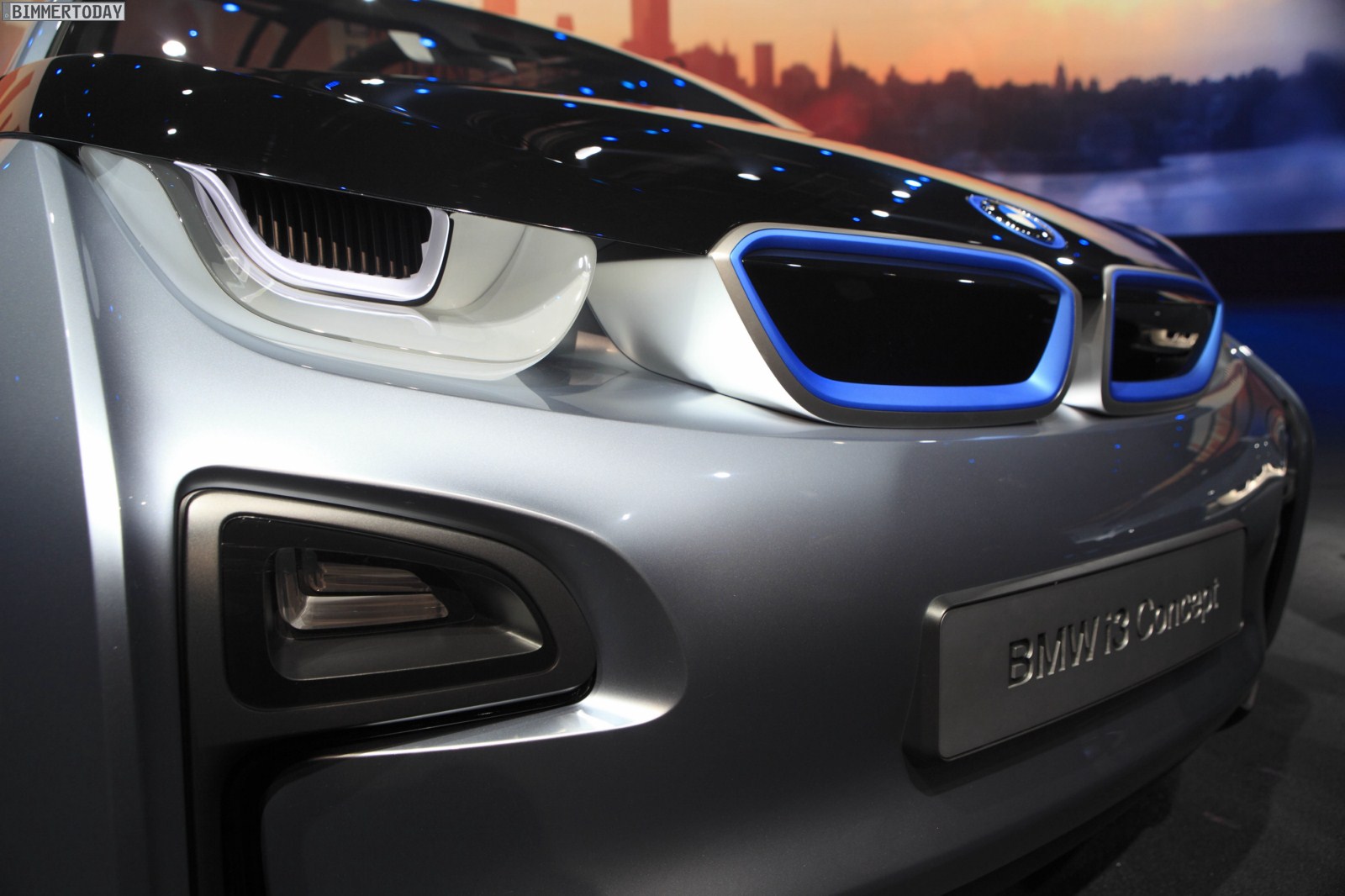
BMW i - estrutura em Fibra de Carbono
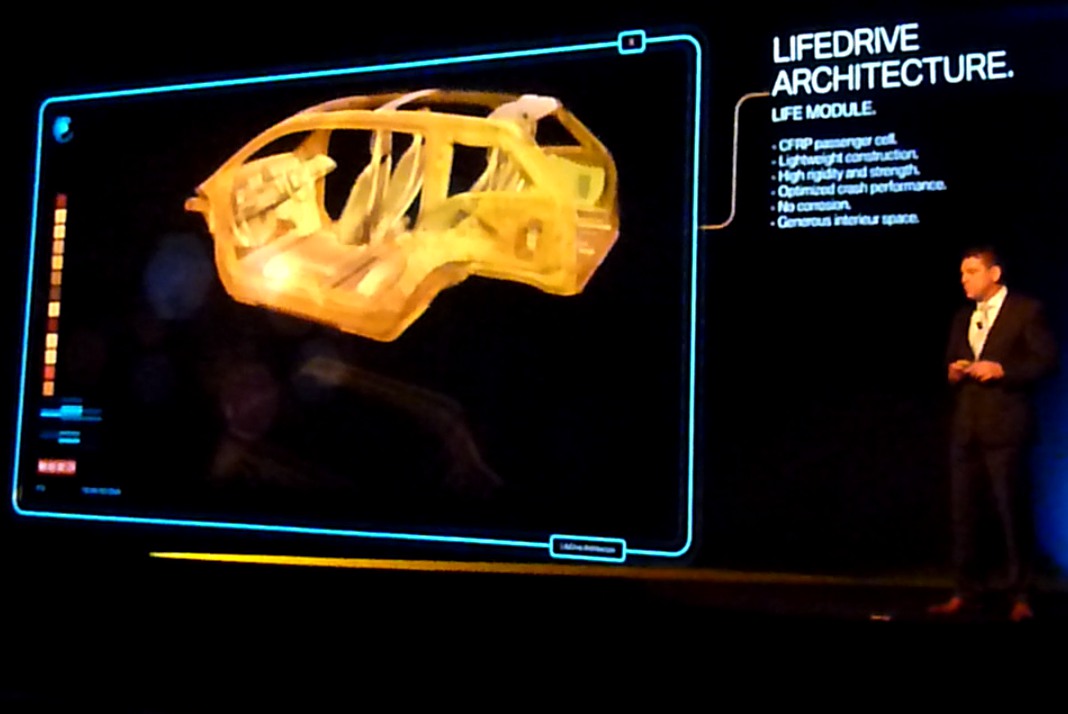
Frankfurt am Main, Alemanha - Quando se fala de veículos elétricos é entendido que o inimigo é a faixa de peso. Qualquer coisa que pode ser feito para reduzir o peso razoavelmente veículo tem de ser investigada e, se possível, incorporadas a produção do veículo. Como Colin Chapman teria dito, "adicionar leveza".
O problema com a cultura existente de carros elétricos é que eles foram construídos a partir reutilizadosplataformas existentes. Seu peso é uma função de todos os pedaços necessários para apoiar um motorrelativamente grande e transmissão de multi-velocidade pesado. Sim, o carro elétrico tem uma bateria muito pesada, mas BMW suporta as baterias tão baixo quanto possível em um chassi de alumínio para o i3 e em uma central 'bateria do túnel' para o i8 (mais uma vez tão baixo como pode ser colocado no chassis).
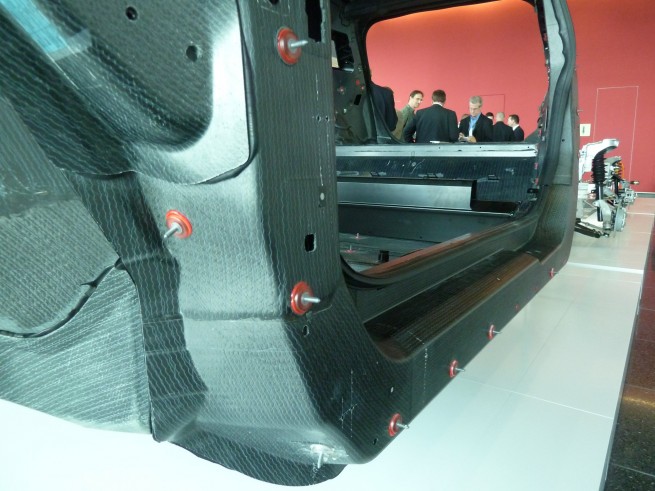
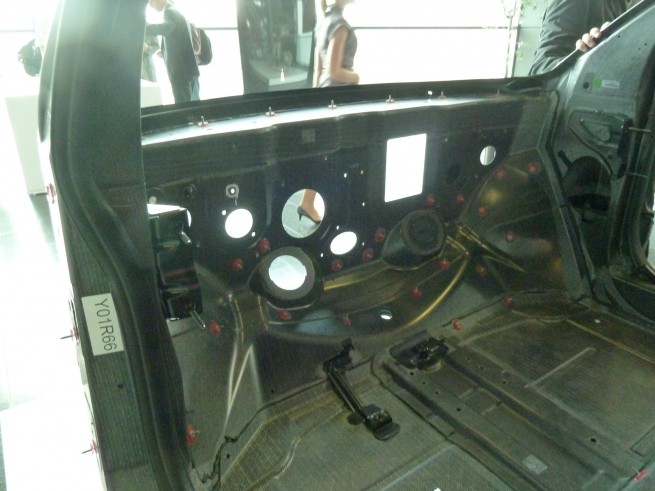
Com um chassis otimizados para a unidade de trem, BMW, em seguida, otimiza a célula de passageiros, o que eles chamam de "módulo de vida", para as pessoas e seus apetrechos. Além disso, a BMW decidiu construir a célula de passageiros a partir de fibra de carbono em plástico reforçado (CFRP).
O processo de produção para a construção de painéis de fibra de carbono estrutural é geralmenteconsiderada como sendo de trabalho e tempo intensivo. O processo tem envolvido uma grande quantidade de trabalho manual e tempo de cura para a transição a partir de tecido e resina para a peça acabada.Painéis CFRP assistindo sendo colocado para trás fórmula carros quão demorado é o processo. As folhas de fibra de carbono (na maioria das vezes pré-impregnadas - conhecida como pré-preg - com resina) têm de ser estabelecidas em moldes, a estratificação adequada construído, e corte personalizado e adequado para o produto acabado.
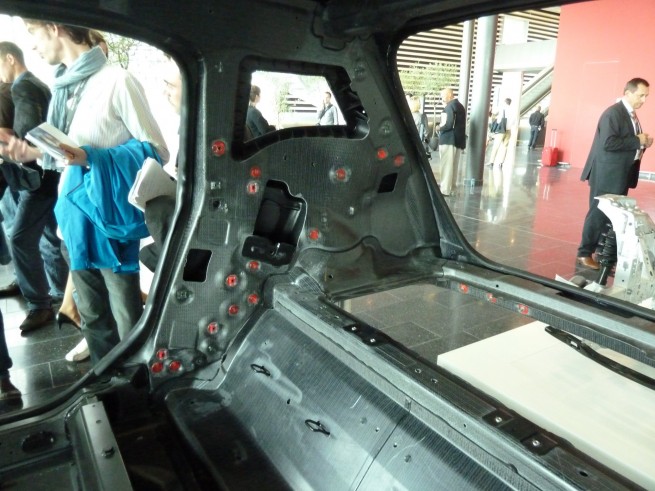
Além disso, pré-preg tem uma vida útil e tem que ser refrigerado até que está pronto para ser formado empainéis. A quantidade de energia necessária através de pré-preg pano de fibra de carbono aumenta o custodo produto final. No entanto, o uso de pré-preg pano de fibra de carbono é uma norma da indústria.
Os processos de produção existentes são um modelo difícil de seguir se você quer produzir em massacarros. Mas a BMW tem vindo a trabalhar em seus processos de refino e de construir painéis CFRP desde 1991.
O que eles vieram com uma virada de jogo e ainda a visualização do processo é bastante simples.
BMW tem "fios" a fibra de carbono produzidos em Moses Lake, WA, EUA. O 'skeens "de fibra de carbonosão enviados para a Alemanha. Há os fios de fibra de carbono são tecidas em tecido. As folhas de fibra tecida de carbono em seguida, passar para o processamento final. O tecido não é injetado com resina epóxiaté que esteja pronto para ser moldado em um painel.
A resina epoxy tecido e se juntam em uma matriz aquecida que é então prensado na forma requerida. O processo de calor e pressão no 'carimbar' die curar o material em um painel leve, forte.
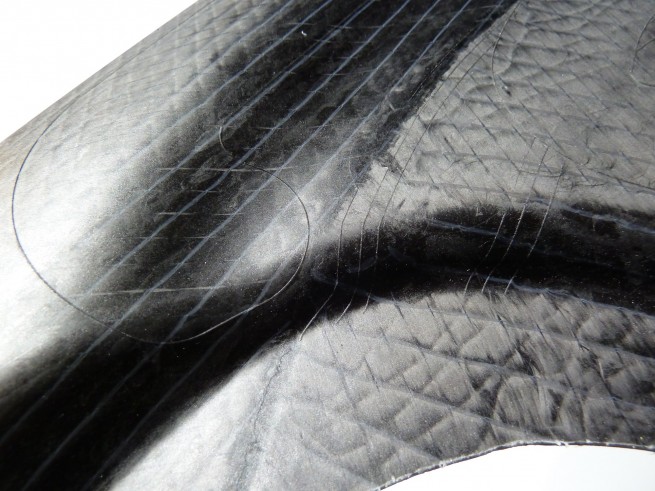
Inerentemente eles recriaram uma prensa para calças para a construção da célula de passageiros. Talvez a melhor analogia seria que carimbar a fibra de carbono em uma mansão de aço semelhante a alguns que usa uma das ferramentas de estamparia exótica de alta temperatura. Este é exatamente o processo que"Johnjay 'BMWBLOG leitor mencionado em um comentário recente. [Provando que BMWBLOG
tem alguns leitores muito inteligente. - Ed.]
O painel gasta apenas alguns minutos na imprensa antes de ser curado. Utilizando técnicas de processamento tradicional, um par de horas seria necessário para terminar o painel. É assim que BMWpode produzir em massa a quantidade de painéis necessários para, possivelmente, construir 30 mil i3sanualmente. Este processo pode demorar mais tempo do que carimbar uma estrutura equivalente em aço, mas não as ordens de magnitude diferença que os tradicionais processos de produção de fibra de carbonoexigem.
Uma pergunta incômoda foi como é que os reparos sejam realizados em veículos danificados. Para lidar com essa eventualidade, prensas BMW designados pontos de reparos nos painéis. Eles também têm sidoa formação de pessoal no processo de remoção de seções danificadas ao ponto apropriado e colagem de peças de reposição no lugar. Na verdade, a painéis separados pressionado são colados juntos para formara célula de passageiros.
Independentemente de como é simples o processo de sons, o diabo está nos detalhes. BMWBLOG esperapara lhe trazer mais informações sobre o processo de produção assim que estiverem disponíveis.
BMW i: The Trouser Press


Frecciarossa23
New member
Finalmente uma noticia desta marca q me faz sorrir!!! apr Espero q apostem em força nesta área (diga-se de passagem, já n era sem tempo!!!).
Espero q apostem em força nesta área (diga-se de passagem, já n era sem tempo!!!).É com agrado que vejo este projecto da BMW, pois não é todos os dias que vemos algo a ser realmente feito a partir do zero.
Isto é... não pegar em coisas feitas e adaptá-las criando desadequações que não permitem explorar todo o potencial das tecnologias envolvidas.
É certo que o caminho que a BMW escolheu não é propriamente o mais acessivel, juntando os custos elevados das baterias com os custos também elevados de materiais exóticos como a fibra de carbono, mas de momento, a única forma de contornar a questão de armazenamento de energia é ter carros substancialmente mais leves.
E porquê? bê-á-bá. Pesa menos, menos energia é necessária para mover o objecto.
Ou seja, como a BMW anunciou, recorrer À fibra de carbono, neste caso, até acaba por ser uma solução cost-effective, já que o uso desse material, com as vantagens de peso associadas, permite usar menor quantidade de baterias, contribuindo, para o mesmo objectivo, de um peso e custo mais contido do produto final.
Além da procura de peso contido também é de notar como são construidos, algo, que já menciono à muito tempo, e que tanta diferença pode fazer, não apenas na questão da diversidade real de veículos que podem aparecer no mercado, como também no custo de produção dos mesmos. Os construtores descobriram que usar os mesmos componentes e plataformas para um sem número de veículos permite grandes economias de escala, mas acaba por limitar bastante, nos moldes actuais, os carros que podemos obter.
Esta gama i da BMW, curiosamente regressa aos principios dos "body-on-frames", apesar de não o ser verdadeiramente.
Se viam coisas como o Overhaulin, na fase de desmontagem do veículo, sobretudo coisas dos anos 60, era possivel separar a carroçaria do chassis. Ou seja, a mesma base poderia dar origem a coisas radicalmente diferentes e daí até a quantidade de peças únicas, levadas um extremo pelos carrozieri italianos.
As estruturas monoblocos actuais são menos flexiveis. É ímpossivel fugir de certos hardpoints, o que dificulta obter veículos optimizados no que toca a packaging para a sua tipologia, e no geral, na linha de produção são necessárias enormes e onerosas prensas para a produção dos diversos paineis.
Os "i" dividem o mal pelas aldeias. O chassis que contém tudo o que é necessário ao deslocar do veículo, um módulo de habitáculo, neste caso em CFRP, e uma carroçaria com paineis que, como já vimos no Smart e na Lotus, é aparufasada/encaixada aos diversos elementos estruturais, o que permite uma escolha bastante mais diversa de materiais e até processos produtivos, já que os paineis deixam de ter papel estrutural, como acontece com a construção unibloco. E é aqui que se podem fazer grandes cortes nos custos da linha de produção, algo que a BMW já explora desde os anos 90, com a chegada do Bangle e também podemos verificar isso no sistema i-Stream do Gordon Murray.
É por estas coisinhas que este projecto é tão interessante. Nem é tanto pela motorização eléctrica ou hibrida, mas pela forma como contornaram as desvantagens desta opção motriz, que tem particularidades que pouco ou nada têm a ver com carros movidos a motores de combustão interna. E como aproveitaram para dar uns passos em frente na forma como são feitos os automóveis.
E a cereja em cima do bolo, ao contrário de coisas como o Leaf e os Prius deste mundo, é serem providenciados com uma pele que adopta o carácter inovador que estes modelos oferecem.
Já tinha escrito em vários tópicos, que começamos a ver os primeiros traços de uma tendência desconstrutivista na estética automóvel, e a BMW até foi das primeiras a apresentar algo nesse género, com o Vision ED, que antecipou o i8. Também vimos isso no recente concurso de design organizado pela Ferrari, e se vissem o que anda a sair dos diversos mestrados em design de transportes e automóvel, parece que será a grande tendência para a próxima década a década e meia. E esta estética adapta-se de forma particularmente bem a este tipo de construção que a gama i assume. Ao termos paineis que são acoplados a elementos estruturais, e com a própria estrutura a sair das entranhas e a assumir também uma função estética (visto de forma mais expressiva nas propostas do concurso Ferrari, ou então olhem para o KTM X-bow), acabamos por ter uma estética definida por camadas.
Mas como em todas as linguagens, podemos obter bons ou maus resultados.
É claro que no i8 seria sempre mais fácil conseguir linhas mais apelativas do que no i3, dado as distintas tipologias.
APesar de ambos ainda serem concepts, e pegando no i8 em particular, permite já verificar diversas diferenças para o Vison ED, que o aproximam mais da produção.
E mesmo assim, mantém a linguagem fiel aos seus principios. E no caso do i8, até acho que conseguiram evoluir de forma positiva partes do desenho do Vision ED, sobretudo os elementos presentes na traseira, que, a meu ver, resultam melhor no i8.
Seria interessante que ambos os modelos conseguissem manter aquela extensa área vidrada na lateral. Algo já muito explorado e muito apetecido pelos designers, mas que envolve questões regulamentares e até psicológicas dos utilizadores (como sensação de segurança entre outras), e que por isso, não acabam por encontrar lugar nos modelos de produção final.
Devido À sua tipologia, claro que o i3, não é tão apetecivel como o i8, mas a adaptação da linguagem do i8, apesar de precisar ainda de uns toques, é no geral, bastante conseguida.
Acho que um dos pormenores a mudar, seria a dimensão das rodas. Rodas e arcos mais pequenos poderiam dar a percepção de um perfil mais alongado, e cortar um pouco mais a percepção de este ser um veículo alto e compacto.
e a linha que delimita a área inferior da superfície vidrada, ao ir de encontro ao pilar A, não deveria ter um vértice na transição para o capot, mas uma pequena curva, até para ficar mais coerente com os contornos dessa superfície.
Apesar de apreciar a solução encontrada para os grupos ópticos traseiros, não deixa de ser uma traseira "flat" comparando com a tridimensionalidade muito mais interessante conseguida no i8, e até na frente dos dois concepts.
Mas concluindo, sem dúvida um trabalho notável, e parece que entrámos finalmento no séc XXI.
Tou curioso para ver para o ano a chegada do i3 e ver como difere do concept.
ACredito que o i8 fique bastante mais fiel ao concept que o i3.
O i3, dá a percepção de que o estilo do mesmo foi uma adaptação posterior ao aparecimento do Vision ED, e daí, o resultado inferior no que toca à integração dos elementos visuais desta linguagem.
Sem dúvida, um belo do thumbs up....
Isto é... não pegar em coisas feitas e adaptá-las criando desadequações que não permitem explorar todo o potencial das tecnologias envolvidas.
É certo que o caminho que a BMW escolheu não é propriamente o mais acessivel, juntando os custos elevados das baterias com os custos também elevados de materiais exóticos como a fibra de carbono, mas de momento, a única forma de contornar a questão de armazenamento de energia é ter carros substancialmente mais leves.
E porquê? bê-á-bá. Pesa menos, menos energia é necessária para mover o objecto.
Ou seja, como a BMW anunciou, recorrer À fibra de carbono, neste caso, até acaba por ser uma solução cost-effective, já que o uso desse material, com as vantagens de peso associadas, permite usar menor quantidade de baterias, contribuindo, para o mesmo objectivo, de um peso e custo mais contido do produto final.
Além da procura de peso contido também é de notar como são construidos, algo, que já menciono à muito tempo, e que tanta diferença pode fazer, não apenas na questão da diversidade real de veículos que podem aparecer no mercado, como também no custo de produção dos mesmos. Os construtores descobriram que usar os mesmos componentes e plataformas para um sem número de veículos permite grandes economias de escala, mas acaba por limitar bastante, nos moldes actuais, os carros que podemos obter.
Esta gama i da BMW, curiosamente regressa aos principios dos "body-on-frames", apesar de não o ser verdadeiramente.
Se viam coisas como o Overhaulin, na fase de desmontagem do veículo, sobretudo coisas dos anos 60, era possivel separar a carroçaria do chassis. Ou seja, a mesma base poderia dar origem a coisas radicalmente diferentes e daí até a quantidade de peças únicas, levadas um extremo pelos carrozieri italianos.
As estruturas monoblocos actuais são menos flexiveis. É ímpossivel fugir de certos hardpoints, o que dificulta obter veículos optimizados no que toca a packaging para a sua tipologia, e no geral, na linha de produção são necessárias enormes e onerosas prensas para a produção dos diversos paineis.
Os "i" dividem o mal pelas aldeias. O chassis que contém tudo o que é necessário ao deslocar do veículo, um módulo de habitáculo, neste caso em CFRP, e uma carroçaria com paineis que, como já vimos no Smart e na Lotus, é aparufasada/encaixada aos diversos elementos estruturais, o que permite uma escolha bastante mais diversa de materiais e até processos produtivos, já que os paineis deixam de ter papel estrutural, como acontece com a construção unibloco. E é aqui que se podem fazer grandes cortes nos custos da linha de produção, algo que a BMW já explora desde os anos 90, com a chegada do Bangle e também podemos verificar isso no sistema i-Stream do Gordon Murray.
É por estas coisinhas que este projecto é tão interessante. Nem é tanto pela motorização eléctrica ou hibrida, mas pela forma como contornaram as desvantagens desta opção motriz, que tem particularidades que pouco ou nada têm a ver com carros movidos a motores de combustão interna. E como aproveitaram para dar uns passos em frente na forma como são feitos os automóveis.
E a cereja em cima do bolo, ao contrário de coisas como o Leaf e os Prius deste mundo, é serem providenciados com uma pele que adopta o carácter inovador que estes modelos oferecem.
Já tinha escrito em vários tópicos, que começamos a ver os primeiros traços de uma tendência desconstrutivista na estética automóvel, e a BMW até foi das primeiras a apresentar algo nesse género, com o Vision ED, que antecipou o i8. Também vimos isso no recente concurso de design organizado pela Ferrari, e se vissem o que anda a sair dos diversos mestrados em design de transportes e automóvel, parece que será a grande tendência para a próxima década a década e meia. E esta estética adapta-se de forma particularmente bem a este tipo de construção que a gama i assume. Ao termos paineis que são acoplados a elementos estruturais, e com a própria estrutura a sair das entranhas e a assumir também uma função estética (visto de forma mais expressiva nas propostas do concurso Ferrari, ou então olhem para o KTM X-bow), acabamos por ter uma estética definida por camadas.
Mas como em todas as linguagens, podemos obter bons ou maus resultados.
É claro que no i8 seria sempre mais fácil conseguir linhas mais apelativas do que no i3, dado as distintas tipologias.
APesar de ambos ainda serem concepts, e pegando no i8 em particular, permite já verificar diversas diferenças para o Vison ED, que o aproximam mais da produção.
E mesmo assim, mantém a linguagem fiel aos seus principios. E no caso do i8, até acho que conseguiram evoluir de forma positiva partes do desenho do Vision ED, sobretudo os elementos presentes na traseira, que, a meu ver, resultam melhor no i8.
Seria interessante que ambos os modelos conseguissem manter aquela extensa área vidrada na lateral. Algo já muito explorado e muito apetecido pelos designers, mas que envolve questões regulamentares e até psicológicas dos utilizadores (como sensação de segurança entre outras), e que por isso, não acabam por encontrar lugar nos modelos de produção final.
Devido À sua tipologia, claro que o i3, não é tão apetecivel como o i8, mas a adaptação da linguagem do i8, apesar de precisar ainda de uns toques, é no geral, bastante conseguida.
Acho que um dos pormenores a mudar, seria a dimensão das rodas. Rodas e arcos mais pequenos poderiam dar a percepção de um perfil mais alongado, e cortar um pouco mais a percepção de este ser um veículo alto e compacto.
e a linha que delimita a área inferior da superfície vidrada, ao ir de encontro ao pilar A, não deveria ter um vértice na transição para o capot, mas uma pequena curva, até para ficar mais coerente com os contornos dessa superfície.
Apesar de apreciar a solução encontrada para os grupos ópticos traseiros, não deixa de ser uma traseira "flat" comparando com a tridimensionalidade muito mais interessante conseguida no i8, e até na frente dos dois concepts.
Mas concluindo, sem dúvida um trabalho notável, e parece que entrámos finalmento no séc XXI.
Tou curioso para ver para o ano a chegada do i3 e ver como difere do concept.
ACredito que o i8 fique bastante mais fiel ao concept que o i3.
O i3, dá a percepção de que o estilo do mesmo foi uma adaptação posterior ao aparecimento do Vision ED, e daí, o resultado inferior no que toca à integração dos elementos visuais desta linguagem.
Sem dúvida, um belo do thumbs up....
BMW's i-cars are a no-brainer
Hilton Holloway
BMW’s unveiling of its near-production i3 and i8 carbonfibre-bodied, electrically-driven, concepts was an unexpectedly triumphal affair.
The German transport minister, Peter Ramsauer, gave a barnstorming speech at the event in Frankfurt, which drew a picture of a remarkably insecure nation, one that felt other countries had already stolen a march on the electrification of the vehicle.
Nissan’s Leaf, Renault’s upcoming fleet of electric vehicles and the Chevrolet Volt had, apparently, resulted in the German car industry feeling it had made a rare mistake and missed out on a global trend.
That shouldn’t be a surprise. Nearly two decades ago, BMW, Mercedes and Audi all bet on a trend for technically innovative and brave new concepts for a ‘greener’ world, which led to then falling flat on their faces.
Mercedes’ A-class, with its incredibly clever sandwich platform, was designed to morph into a battery-powered or hydrogen-powered machine, as the trend for non-fossil fuel mushroomed at the turn of the century. Of course, it didn’t. The Smart car predicted that city centres would become no-go zones for conventional cars and that drivers would merrily downsize into tiny commuter cars. That didn’t happen, either. Both projects cost Mercedes billions.
Audi’s super-light and super-slippy A2 was also a commercial failure and demand for the 90mpg VW Lupo was minimal.
BMW bet that drivers would want to keep their premium cars, so worked long and hard on hydrogen fuel technology. It all but abandoned that work last year. Arguably, the German car industry was just too far ahead of the global curve. Predicting social trends and shifting global governmental policy is a near-impossible task. Ironically, the original A-class, the A2 and the 90mpg Lupo would, today, be lauded as right for the time.
As a consequence, BMW’s approach to electrification is cautious, but carefully considered. These vehicles will be premium priced, made from premium materials and aimed at the most affluent who live in the world’s rich and getting-richer mega cities. The ‘Born Electric’ catchline is part of BMW’s marketing message, which wants to stress that these cars are bespoke designs and not ‘ordinary’ cars adapted for battery propulsion.
Although we are more than two years from these cars arriving in the showrooms, the biggest markets are likely to be the Far East, New York, Frankfurt and London. Surprising as it may seem, many of the world’s richest see conspicuously ‘green’ products as a must-have. Most of us might aspire to the upcoming 99g/km 3-series. The super-affluent will want a BMW i3 to complement their Range Rover.
Reading between the lines, these two cars will be part of a much bigger line-up. The i8 is probably the flagship model, the vision of a supercar with a conscience. If I was going to guess, I’d say that the i1 might be the upcoming BMW electric scooter, with shorter and longer versions of the i3, fitting in as the i2 city car and i4 compact seven-seater.
At the unveiling, the BMW bosses resolutely refused to give details about the amount of money invested in the i-car line-up or the likely profitability. Whether it pays off for BMW in the long-run is hard to say, but from a corporate social responsibility point of view, the i-car project is a no-brainer.
in Autocar
Um tipo que costuma escrever sempre umas coisas interessantes. Além do mais é designer, como não se pode gostar dele?[
 ]
]Focando, uma pequena análise interessante sobre os eco-cars germânicos que precederam os "i" da BMW
BLADERUNNER
Well-known member
BLADERUNNER
Well-known member
Tudo parte de um corpo híbrido em alumínio e fibra de carbono.
A parte inferior do chassis é em alumínio – é mais barato que a fibra de carbono, facilmente programáveis as zonas de deformação em caso de impacto, constitui uma base modular que poderá ser utilizada em diversos futuros modelos da marca. Este alberga a suspensão, a transmissão, as baterias e o motor eléctrico.
A parte superior do chassis que forma a carroçaria é feita com fibra de carbono. Contrariamente ao entrançamento de fibras que é habitual utilizar-se, a BMW utiliza uma disposição em paralelo, mas com várias camadas dispostas em diversos sentidos para resistir a esforços vindos de diferentes direcções.
A BMW utiliza a técnica que denominou de “preforming” que consiste na construção de mantas de fibra de carbono que posteriormente ganham forma num molde sob pressão e acção do calor. Assim, num processo de “preforming joing”, é permitido ir acrescentando várias peças até formar peças maiores e mais complexas impossíveis de se obter em alumínio ou aço.
Depois, injecta-se sob pressão resina epóxida líquida para tapar todos os poros, retirando-se do molde após uma secagem rápida, cortando-se as rebarbas e fazendo-se furações (onde é necessário). A difícil junção com o alumínio fica também assegurada.
Com o aumento de unidades comercializadas, estima-se que o preço venha a sofrer uma enorme redução. Os passos dados pela BMW e pela Lamborghini estão a abrir caminho ao futuro: carros mais leves, com menor consumo de combustível/energia, menores ou nenhumas emissões de CO2, maior rigidez dos materiais e maior segurança passiva para os ocupantes.
Em traços largos, esta é a explicação possível (explicar isto por menos palavras tornava-se incompreensível[ ]). O futuro está aí à espreita e só quem tiver visão a longo prazo poderá sobreviver.
A parte inferior do chassis é em alumínio – é mais barato que a fibra de carbono, facilmente programáveis as zonas de deformação em caso de impacto, constitui uma base modular que poderá ser utilizada em diversos futuros modelos da marca. Este alberga a suspensão, a transmissão, as baterias e o motor eléctrico.
A parte superior do chassis que forma a carroçaria é feita com fibra de carbono. Contrariamente ao entrançamento de fibras que é habitual utilizar-se, a BMW utiliza uma disposição em paralelo, mas com várias camadas dispostas em diversos sentidos para resistir a esforços vindos de diferentes direcções.
A BMW utiliza a técnica que denominou de “preforming” que consiste na construção de mantas de fibra de carbono que posteriormente ganham forma num molde sob pressão e acção do calor. Assim, num processo de “preforming joing”, é permitido ir acrescentando várias peças até formar peças maiores e mais complexas impossíveis de se obter em alumínio ou aço.
Depois, injecta-se sob pressão resina epóxida líquida para tapar todos os poros, retirando-se do molde após uma secagem rápida, cortando-se as rebarbas e fazendo-se furações (onde é necessário). A difícil junção com o alumínio fica também assegurada.
Com o aumento de unidades comercializadas, estima-se que o preço venha a sofrer uma enorme redução. Os passos dados pela BMW e pela Lamborghini estão a abrir caminho ao futuro: carros mais leves, com menor consumo de combustível/energia, menores ou nenhumas emissões de CO2, maior rigidez dos materiais e maior segurança passiva para os ocupantes.
Em traços largos, esta é a explicação possível (explicar isto por menos palavras tornava-se incompreensível[
]). O futuro está aí à espreita e só quem tiver visão a longo prazo poderá sobreviver.
BLADERUNNER
Well-known member

Unreal
Well-known member
Esta gama i da BMW, curiosamente regressa aos principios dos "body-on-frames", apesar de não o ser verdadeiramente.
A GM já tinha pensado em algo semelhante há 10 anos atrás.

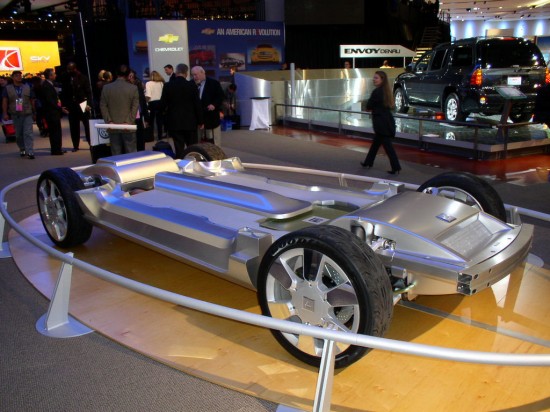
A GM já tinha pensado em algo semelhante há 10 anos atrás.
Recordo-me perfeitamente da plataforma skateboard da GM na altura. Antes desse Hy-wire tinham lançado o Autonomy com a mesma plataforma.
Só que esse skate é bem mais visionário/futurista que a solução "já ali ao virar da esquina" da BMW.
E isso porque, além da "mecânica" ser do tipo fuel-cell a hidrogenio, também recorre a drive-by-wire.
O que não me parecem realidades próximas, pelo menos na solução total apresentada pela GM. Existem, inclusivamente, diversos impedimentos legais, que não permitem a ausência de ligações mecânicas entre alguns comandos do carro, como direcção e travões, aos suas respectivos componentes.
É uma solução com futuro, mas a longo prazo e não de aplicação imediata.
BLADERUNNER
Well-known member
Gavin Green on the hidden highlights of the BMW i3
By Gavin Green
24 August 2011 09:30
Flew to Frankfurt a few weeks ago for the unveiling of the new BMW i electric cars, and very impressed I was too. Although still two years from production, the i3 (we’re told the concept is ‘very close’ to the showroom vehicle) is easily the most credible EV I have seen, not least because it has been conceived from scratch as a battery car rather than a petrol car convert.
Even the Nissan Leaf – the best EV to date – has petrol car platform carryovers, and an architecture that does not fully utilise the many design advantages offered by an all-new powertrain. Not least, the Leaf has a largely redundant grille, conventional two-box dimensions, and its style is petrol car generic.
The Nissan engineers, I suspect, were conscious that too much boldness – no matter how practicable – would ostracise those more timorous early adopters. So they played safe, using petrol car cues to reassure the wary. By 2013, BMW will have the advantage of a further three years of EV conditioning. It also has a naturally more adventurous customer base.
The full story on the i3 and its soulmate, the i8, can be read elsewhere on this website. But one quality, largely unpublicised, was especially meritorious.
Behold! A city car you can see out of!
Manufacturing the body from carbon fibre reinforced plastic has obvious weight advantages. The i3 carbon passenger cell weighs half as much as steel. Just as important, it offers greater strength. So, on the i3, we do not get roof pillars with the thickness of oak trees; they are unnecessary (in fact, we get no B pillar at all). Instead, we discover a car that has a view, inside looking out, more like a bowl than a bunker.
Hallelujah! At last, a city car that offers decent rear three-quarter visibility! In contrast to other small hatches that pretend to be well suited to the urban jungle but, owing to the peep-show panorama, frequently are not.
The appalling visibility of current small cars – in fact, most cars, irrespective of size – is one of the greatest design indictments of modern automobiles. It’s a direct corollary of overbearing regulations, and numerous influential consumer studies, that highlight and prioritise secondary safety (surviving an impact) over primary safety (avoiding it).
The i3 circumvents the problem owing to the muscular wonders of carbon fibre. As carbon spreads – and it will – so there is the welcome prospect of new-age city cars that actually allow you to see what’s happening over your shoulder.
in CAR
BLADERUNNER
Well-known member
Um dos aspectos mais interessantes que recentemente descobri no Concept ActiveE é a quase não-necessidade de utilizar o travão para parar o carro em cidade, isto é, a simples desaceleração permite imobilizar o veículo sem necessidade de travagem em 75% dos casos em meio urbano, regenerando mais as baterias face aos comuns sistemas de aproveitamento da energia de travagem.
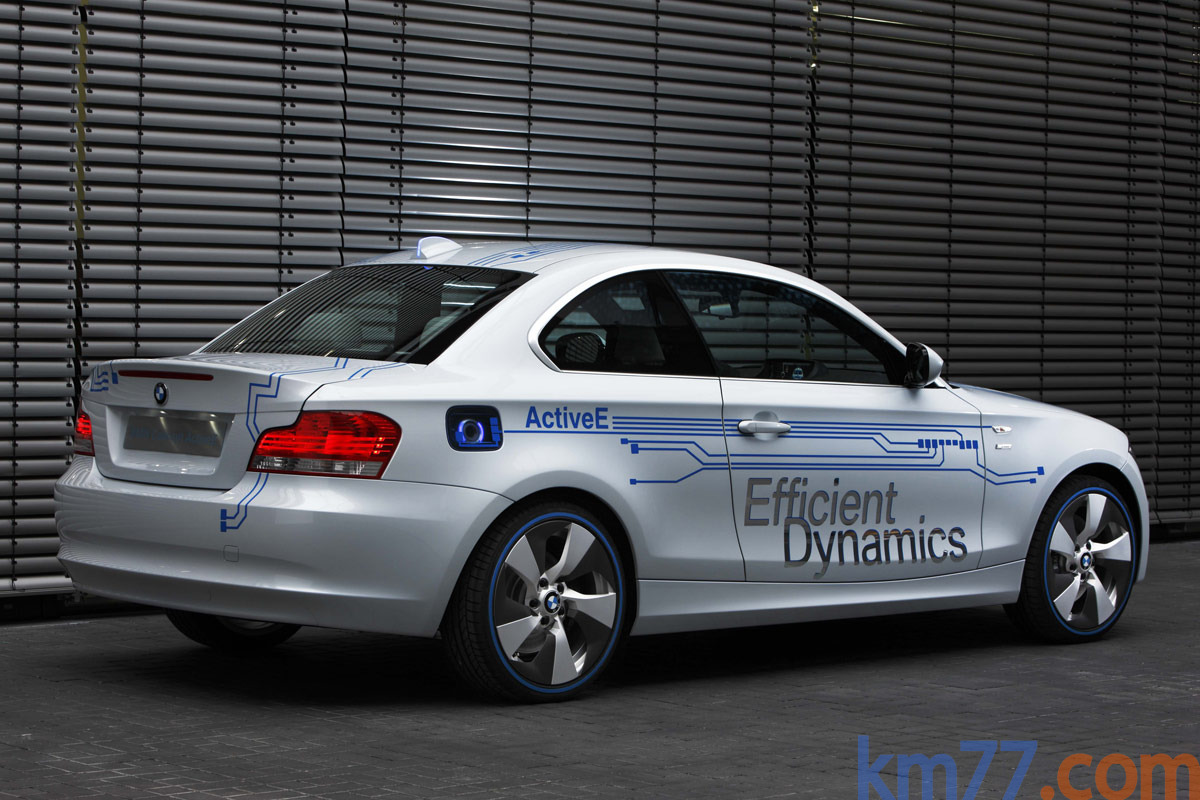
Esperemos que essa característica esteja presente neste i3, pois parece ser uma excelente ideia para aumentar a autonomia destes veículos em meio urbano.
Esperemos que essa característica esteja presente neste i3, pois parece ser uma excelente ideia para aumentar a autonomia destes veículos em meio urbano.
BLADERUNNER
Well-known member


